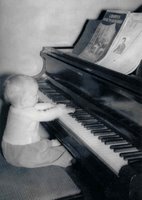
I'm not talking about Health Care or getting a state budget passed in Pennsylvania. In this case, it's getting people to listen to “classical music.”
As I get ready to return to the class-room with the Mendelssohn Outreach Project or classes I'm offering at the Harrisburg Area Community College, I've been rereading a 1993 article by John Steinmetz that first appeared in the NARAS Journal that summer. It's been reprinted, re-posted and circulated by e-mail many times since then. I recently received it from a musician friend in New York City and I dutifully sent it on to other friends of mine – fellow composers and musicians, music teachers and music presenters as well as music-lovers.
It's called “Resuscitating Art Music” whether it's Bach, Coltrane, Shankar or Zwilich and part of the problem is defining “what is Art Music.”
Terminology has always been a sticking point. When I was teaching in college many (many) years ago, one of my roommates was working with a high school music teacher who told her class “classical music is the kind of music people don't like.”
Even “classical music” is hard to define: it is always opposed to “popular music” (Art Culture VS. Pop Culture). From the Pop perspective, then, “classical music” would be “Unpopular Music” so perhaps this teacher back in the '70s wasn't far from wrong.
It has been called “serious music” as if the latest rock stars aren't serious about what they're writing and performing...
When the Beatles were new and my parents' generation was horrified at their dress and hair-styles as much as their music, “classical music” was called “Long-Hair Music,” looking at pictures of composers like Beethoven and Franz Liszt, for instance. Of course, once Rock Music's hair-styles gotten even longer and wilder, the term disappeared.
The sound of “Art Music” makes it seem like it should be pronounced “Aaaht Music” and be accompanied with a condescending nod of the tiara (no offense to friends from Boston who actually talk that way, naturally). It became a class thing, nothing to do with classical or popular. Aaaht was the domain of the wealthy – Popular was (ewww) nasty and plebeian. Didn't these guys write for royalty, anyway?
But I like John Steinmetz's definition which he admits is, like most simple definitions, an oversimplification. Art Music is music that requires you to pay attention to it.
Popular Music doesn't require that. He mentions a student who said, in comparing a 14th Century piece with a favorite rock song, “I like rock music because you don't have to pay attention in order to get it.”
It's not the attention SPAN, one thing many, generally older people worry about in the younger generations – being able to concentrate on a sentence of more than 7 words – but the ability to concentrate at all, to focus on something that might be rewarding.
In this sense, Steinmetz says, he's defining not the music (or any other art form) but the listener (or any other form of “art consumer,” to borrow a particularly nasty term of marketing demographics).
But perhaps “consumer” isn't so bad after all: for many of us, Art is as important to our lives as food and water. The problem, then, is getting that concept across to people who aren't paying attention.
*** ***** ******** ***** ***
So, he says, let's assume art music “requires conscious attention and some experience in order to be understood.” He says this can apply to many different kinds of music whether they're from different cultures or different levels of sophistication and style. Mainly, in his sense and mine, it's Western European Classical Music.
He uses the term “consume” in the sense that art music requires listeners who want to do more than that. Speaking in terms of demographics, much of it was intended for an audience of musicians, either professional or amateur. In the days of Mozart and Mendelssohn, most middle-class people knew how to play the piano or sing, maybe play the violin. Even some royalty were amateur musicians: King Frederick the Great was a good flutist and an adequate composer; his nephew, not a great king, played the cello though one assumes any comments about his playing may not have been thoroughly honest. The Austrian emperor, Joseph II, who once accused Mozart of writing “too many notes,” enjoyed playing the harpsichord.
More typical of the audience in those days was a family that lived in Vienna in the early 1800s. The father was a poor school teacher but he enjoyed playing the cello. Three of his sons played the violin. One of them showed an early talent for composing and since he could also play the viola, the family would entertain themselves sitting around after dinner by playing string quartets. Some of those pieces were composed by one of the sons, the one named Franz Schubert.
Not because there was nothing on TV, but because there was no TV or any other form of “passive entertainment provider.” It was very much a do-it-yourself age.
Today, kids gather in garages and form their own bands. It's rarely a generational after-dinner gathering, but much of the idea is the same: they play their favorite music themselves and they write their own. They have aspirations of becoming rock stars but usually end up becoming business executives or teachers.
The only problem with this approach is the implication Mozart only wrote for other musicians. This is a complaint leveled at 20th Century composers, too: only a musician could understand this stuff. It makes it too esoteric when that's not the intent.
A composer has to first reach the musicians because that's the only way a composer is going to reach an audience. A piece of music isn't going to reach a listener like a book is going to reach a reader: a novelist doesn't need someone to read his latest book to a new audience, though we've come to that, now, with audio books – listening to a book for people who are too busy to read. You plop it into the CD-player and listen while you're in the car or sit there while... what, reading the newspaper? Aside from people who are sight-challenged, I could understand using it on long-drives or for the daily stuck-in-traffic commutes, but sitting in your living room? Well, laziness aside, that's another issue...
Being a musician makes a person more open to discovery in a piece that requires attention. There's an old saying “the more you know about it, the more you'll appreciate something.” It doesn't mean you have to know every tiny detail about how it's constructed, how this chord moves to this chord, but understanding that helps you better appreciate the final result. When friends make fun of me because I don't understand the finer details of computer programming or how a six-cylinder combustion engine works, I usually respond “I can drive a car without needing to know how to rebuild the engine – but I know how to write a symphony.” Unfortunately, that logic doesn't hold much water with non-musicians.
Steinmetz goes on to say that the attitude toward art music in this country (the United States, for my foreign readers) is not the same as it is in Europe where the tradition – as most European traditions do – goes back much further.
This was never so clear to me as the time I walked into a church in England to sing part of a concert there on the first leg of a college concert choir tour, the summer of 1970. The part we were standing on was the original floor of the church which, in a couple of years, would be celebrating its 1,000th Anniversary. I kept thinking “in a few more years, Americans will be going crazy over a 200-year-old bell with a crack in it...” It kind of spoiled some of the impact of the impending 1976 Bicentennial, especially when people would fuss about how long ago that was.
It's not like I'd never thought about how old things were. I mean, I knew some of the buildings I'd seen pictures of were older than when Columbus sailed the ocean blue, but actually standing on the floor of a church that had been in place almost a thousand years...? That was, as kids say today, “awesome!”
Another thing Steinmetz points out is the American penchant for “how much does that cost?” It's not just looking for a bargain but the financial Bottom Line has become a very real thing in the arts.
A concert is a success not because of how well it was played or how the audience liked it: it is important how much money it made in ticket sales.
When you look at the movie rankings from last weekend, you see they're ranked by how much they earned at the box-office. It has nothing to do with the quality of the movie or even whether all those people liked it after they'd bought their tickets. If your movie wasn't on the Top 5 or Top 10 list, it must not have been very good. If you like to follow the off-beat, independent films, you might not even know they exist until they appear at the little hole-in-the-wall Arts Cinema you'd be attending regularly to see any of the films you like.
If you're going to “get” anything out of the experience of art music, you're not going to get it by paying for it – for the ticket or the CD, yes, but not for the experience of listening to it. That takes a little something extra.
It costs attention.
*** ***** ******** ***** ***
I went to a Gretna Music concert recently with some challenging new music on it – including the world premiere of a piece for violin and percussion by a Malaysian composer I'd never heard of before. In fact, I'm not sure I've ever heard anything by any Malaysian composer before. The Momenta Quartet played a program that paired Kee-yong Chong's “Suspended Love” (a world premiere) with a slightly older piece by Luciano Berio for viola and percussion which included a tape-recording of a Sicilian street-vendor (folk music, it was called, but not the kind of folk music you might expect: this was raw and primitive, about as far removed from the concert stage as you could get). On the 2nd half of the program was a string quartet by Robert Schumann.
The audience was beyond small. The Schumann didn't bring them in, the fact nobody really knows who Momenta is (are?) didn't help – and a world premiere plus a work with tape? As Yogi Bera would've put it, “they stayed away in droves.”
Curiously, most of the people there actually seemed to enjoy it. Nobody walked out. Everybody I could see looked pretty attentive, not bored or uncomfortable. Everyone was applauding, some vociferously.
Because there had been some noise issues – the extremely delicate ending had been drowned out by a passing plane – it was agreed they should do “Suspended Love” again, at the end of the concert. Anyone who wanted to stay, could.
True, over half the audience left while the stage was reset. But those that stayed certainly enjoyed hearing it again – or at least hearing all of it. There were new things to hear, things you heard differently - not to mention hearing it after having heard some, by comparison, pretty tame Schumann.
Among those standing at the end were a few of the young people in the audience and a number of “senior citizens” (one of them in her 90s), people you'd stereotypically assume were more conservative in their tastes.
So if everyone seemed to enjoy it once if not twice, why is the audience so small when you announce there's a new piece on the program or there's a composer most people associate with unpleasantness (poor Schoenberg)?
Lots of people came to hear the world premiere of a violin sonata by Philip Glass with Market Square Concerts earlier this year. A recently premiered percussion concerto by Jennifer Higdon was on a program with the Harrisburg Symphony in 2007 and the audience “went wild” - you'd think it had been some chestnut by Tchaikovsky, the way the audience applauded and cheered!
But drawing them into the concert hall to hear the music in the first place is the challenge. Too many people assume “I'm not going to like this music” because it's boring or it's new or, more typically, it's just unfamiliar.
A friend once asked me why the Harrisburg Symphony had programmed Dvořák's 7th Symphony. “Why aren't they doing the New World?” It was more popular and would sell more tickets. She didn't know the piece and automatically assumed it wasn't as good.
“Do you like Dvořák's New World?” I asked her.
“Yes!” she replied with that “of course” tone-of-voice, challenging my sanity.
“Then you should like the 7th: they're by the same composer. Try it.”
Later, this same person asked me why the orchestra had programmed excerpts from an opera by Mussorgsky that you don't often get a chance to hear.
“Is there any good music in Boris Godunov?”
After telling her it was one of my favorite operas, I suggested she come and hear it. She did. I passed her on the way backstage and she said “Wasn't that just wonderful!?!”
A couple of years ago, someone asked me – when we were trying to figure out what to include in a list of the “most famous” (not necessarily best) pieces of classical music, I had mentioned adding Beethoven's 7th Symphony to the 5th and 9th that were already there.
He said “I know Beethoven's 5th and I know Beethoven's 9th: why do I need to know Beethoven's 7th?”
And it was clear that “because it's a great piece” wasn't a good enough argument.
If you can't expose people who already like art music to other art music that's unfamiliar to them, how are you going to convince people who've never heard it before to take a chance on it, much less buy a ticket or a CD and enjoy it?
More to come...
- Dr. Dick
Friday, September 04, 2009

Wednesday, September 02, 2009
Dr. Dick, Back in the Class Room: Fall Classes at HACC
 I know Autumn doesn't start officially until September 22nd but it sure feels like Fall in this part of the suburbs. And School has already begun!
I've been busy the past week for a new music education outreach program with a performance of some music by Felix Mendelssohn, writing down a lot of stuff about Mendelssohn, his life and times for the teachers and students involved in this project at the Harrisburg School District's John Harris High School – posted over at MENDELSSOHN'S WORLD – so far, about 30,000 words in 18 different posts.
This month, I'll also be offering the first of a series of “continuing education” classes at the Wildwood Campus of Harrisburg Area Community College. (It's called Wildwood Campus because “Harrisburg Campus of the Harrisburg Area Community College sounds redundant except there are branch campuses in Gettysburg, York, Lebanon and Lancaster; it's next
 to Wildwood Lake, just north of town, hence the name – it's not like it's a crazy party school or anything... is it?)
The first one is in just two weeks – a “Survey of 20th Century Music” that meets three consecutive Thursday evenings at 7pm (September 17th, 24th and October 1st. For more information, you can can check out this link.
It's basically geared to people who are not that experienced with 20th Century Music but have some background in music – who enjoy going to concerts and listening to classical music – but are not musicians themselves. I'll be talking about the different basic styles of the last century and how they evolved from the 19th Century – and maybe try to see where music may be going this century. It's fascinates me to think that what we consider the real start of 20th Century music didn't happen until The Rite of Spring or Pierrot Lunaire, and they both happened in 1913... And here we are, only in 2009!
 I'll be doing some other classes, too: there are three quick surveys of the first three operas on the Metropolitan Opera HD Transmissions' schedule that are designed for people who may have never actually SEEN an opera before. They're introductions to Puccini's Tosca (meets on Thursday, Oct. 8th; the Live HD Broadcast is Saturday, Oct. 10th), to Verdi's Aida (meets Thursday, Oct. 22nd; broadcast is Saturday, Oct. 24th) and to Puccini's Turandot (meets Thursday, Nov. 5th; broadcast is Saturday, Nov. 7th). You can take them individually or all three – registration includes the lecture only.
In November, I'll be offering two more classes.
 One is an “Introduction to the Basic Language of Music” and is geared for music lovers who may not read music but enjoy listening to it and wonder what the mystery is all about. Not sure I'll answer all that, but we'll be looking at different things from musical notation to the building-blocks of form, pointing out different things to listen to along the way. There are just two meetings – on Thursdays, November 12th & 19th – so it's not going to be a comprehensive college-level course, just an introduction. You can find out more about it, here.
 The last one this semester is an introduction to Franz Josef Haydn. 2009 is the 200th Anniversary of his death. The November concert of the Harrisburg Symphony is a performance of his great oratorio “The Creation.” I'll be presenting two lectures on Haydn's music – one, an overview of his life and style, looking mostly at the symphonies and string quartets; the second is primarily about “The Creation.” It meets on Thursday's , November 11th and 18th with the concerts that weekend, Nov. 21st & 22nd. People signing up for the class will have the opportunity to take in the Friday night rehearsal. The registration fee is for the class only and does not include the concert's ticket price. You can sign up for it, here.
- Dr. Dick
As Pennsylvania Is Now the Only State Without a Budget
Here's an interesting article from the Pittsburgh Post-Gazette - as arts groups in the Pittsburgh Area look for additional funding.
Could we just get the people in Harrisburg to start talking about what they're doing to pass the budget rather than bicker about what the other side is not doing?
I mean, sheesh, already...
- Dr. Dick
Could we just get the people in Harrisburg to start talking about what they're doing to pass the budget rather than bicker about what the other side is not doing?
I mean, sheesh, already...
- Dr. Dick
Shout-Out to a College Roommate Trying to Reach Me...
I know Autumn doesn't start for a few more weeks – the 22nd of September, officially, but it feels like Fall in this part of the suburbs. School, however, has already started and they're already gearing up for the first school vacation – Labor Day! It feels weird to me to be thinking about teaching again – my last time as an official “teacher” was as an Assistant Professor at the University of Connecticut in 1978 – but the “Mendelssohn Educational Outreach Project” with the Harrisburg City Schools' John Harris High School culminates in a performance with Odin Rathnam's West Branch Music Festival program in just two weeks and then continues through the month with some follow-up.
The past week has been busy as I try to write down a lot of stuff about Mendelssohn for the teachers and students involved in this project – posted over at MENDELSSOHN'S WORLD – so far, about 30,000 words in 18 different posts.
As a result, the rest of my life is pretty much on hold – no time to compose, certainly; not much time to read anything not related to Mendelssohn...
*** ***** ******** ***** ***
I usually don't do this - like megatwittering - but a roommate from my freshman year at Susquehanna University has been trying to reach me and I can't respond, so... here's hoping he checks the blog ;-)
Hi, Bill – I've gotten your e-mails, just can't respond. Your address is listed as “dot-local” rather than dot-com or anything more familiar, and any reply or other possible variation comes back “undeliverable.” Do you have a different account you could try? Thanks – good to hear from you!
- Dr. Dick
The past week has been busy as I try to write down a lot of stuff about Mendelssohn for the teachers and students involved in this project – posted over at MENDELSSOHN'S WORLD – so far, about 30,000 words in 18 different posts.
As a result, the rest of my life is pretty much on hold – no time to compose, certainly; not much time to read anything not related to Mendelssohn...
*** ***** ******** ***** ***
I usually don't do this - like megatwittering - but a roommate from my freshman year at Susquehanna University has been trying to reach me and I can't respond, so... here's hoping he checks the blog ;-)
Hi, Bill – I've gotten your e-mails, just can't respond. Your address is listed as “dot-local” rather than dot-com or anything more familiar, and any reply or other possible variation comes back “undeliverable.” Do you have a different account you could try? Thanks – good to hear from you!
- Dr. Dick
Saturday, August 29, 2009
More for Mendelssohn's World: Some Videos
 This is part of a post over at Mendelssohn's World, the educational outreach program that's coming up in a couple of weeks. I just wanted to post these videos here: the first is a tourist's video from a visit to Fingal's Cave in Scotland (see an aerial view of the island, left), the same cave that Mendelssohn visited in 1829 and turned into his "Hebrides Overture." I get into the difference between what is "Classical" and what is "Romantic" - Right Brain and Left Brain, too. And then end with the Scherzo from the Octet (which is on the program the students will hear on Sept. 16th with Odin Rathnam's West Branch Music Festival musicians.
*** ***** ******** ***** ***
 Here are two videos for you – this first one was filmed by someone visiting the Island of Staffa and seeing the cave (see right). It's a cloudy, rainy day (making it more mysterious) and he sweeps the camera around a bit. It's also a little dark looking into the cave but you get to hear someone playing real Scottish bag-pipes inside the cave. Then around 3:00 into the clip, the tide starts to come in: watch the waves but listen to them, too. You only need to watch about a minute of it here, just to get the idea. It's really cool at 5:07, though, where the cameraman is inside the cave, looking out at the sea. Listen to the waves!
- - - - - - -
- - - - - - -
The cave probably hasn't changed much in the 180 years since Mendelssohn saw it and jotted down the thematic idea that eventually became this piece of music. Listen how the music swells, rising and falling like waves.
This video is just the opening 4 minutes, not the whole piece, and it's played by a student orchestra in Belgium. Maybe you can run both of the videos at the same time (starting the first clip around 2:00 in and then starting Mendelssohn's music - you might need to turn the volume down or off on the Cave Video, though)?
- - - - - - -
- - - - - - -
It may not accompany the first video like a film-score, but once you've seen the actual cave and heard the sound of the waves, listen just to the music in the 2nd video and imagine what it is you're hearing the music describe.
This is what we call “program music” - music that tells a story or paints a scene. And this is something that is a “Romantic” (as opposed to a “Classical”) idea.
Now, when Mendelssohn writes an octet for strings – one of the works we'll hear on September 16th – we'll hear an “abstract” work – music that's only about music, not really telling a story. That's a very “Classical” idea.
But when we get to the 3rd movement, the “scherzo” (SKAIR-tzoh), there's a slight change. Scherzo is the Italian word for “joke” - in music, it's something fast, lively, sometimes funny but at least not always so serious.
Mendelssohn told his older sister that this section of the music was inspired by the fairy spirits associated with the old German equivalent of Halloween. It was these lines by the great German poet Goethe (GER-teh) who was also a personal friend of Mendelssohn's: they describe the shadows of elves (or some kind of sprites) barely visible, who then suddenly disappear, as if blown away like leaves in a breeze.
Floating cloud and trailing mist
Are illuminated from above.
Breeze in the foliage and wind in the reeds –
And all is turned to dust.
This music goes up to 4:22 - the rest of the clip is the last movement of the octet.
- - - - - - -
- - - - - - -
The fact it's inspired by a visual or literary image makes this “Romantic” (a typical Classical composer from the 18th Century wouldn't have done that) but the fact the sound and texture is so clean and the harmony so clear makes it very “Classical.”
You could say this is Mendelssohn using BOTH sides of his brain.
Oh, and did I mention Mendelssohn was 16 when he composed the Octet?
- Dr. Dick
Thursday, August 27, 2009
As It Happens...
 Turns out there's another website out there called "The Mendelssohn Project." And they have copyrighted their name internationally.
So they've asked me to change the name of my project to something else.
I suppose I could've just called it "Dr. Dick's Mendelssohn Project" but I decided to go with "MENDELSSOHN'S WORLD" and everything will now be posted over at my latest blog, DR. DICK'S "MENDELSSOHN'S WORLD"...
That includes the introductory post and those four posts I wrote today:
A Mendelssohn Chronology
A Musical Glossary for Mendelssohn's World
Some Historical Events
The Impact of Napoleon
which is about 6,800+ words for a day, not including these...
Because I will now need to have the school district change the link for their web-site and for the various teachers accessing it, I will need to leave these posts up here for a day or two until their I.T. folks can make the changes. Afterward, then, everything will be over at the new site.
- Dr. Dick
8-28-2009
These posts have officially been removed from Thoughts on a Train. They are now available only at Mendelssohn's World.
Monday, August 24, 2009
The Arts, the Budget & Pennsylvania: Continued
 On July 14th, there was a rally to support funding for the arts in Pennsylvania, organized by Citizens for the Arts in Pennsylvania.
As of August 24th, Pennsylvania is still without a budget.
Here is a video clip posted initially on Facebook by Stuart Landon who was at that July rally in the Capitol Rotunda.
He was standing not far from me, near the back of the main entryway, facing the steps. It's a little noisy, the audio may be a little hard to understand at times, and it's heavily edited – the whole rally was 90-minutes long – but I think it will you give you more than just a taste of what was happening there:
- - - - - - -
- - - - - - -
Yesterday, the Patriot-News in Harrisburg printed an article written by Rep. Dwight Davis, D-Philadelphia, chairman of the House Appropriations Committee and one of the more electrifying speakers at the July Rally for the Arts.
He begins the article by describing a beautiful summer evening in Harrisburg's Reservoir Park, watching the Gamut Classics' Shakespeare Festival production of Cymbeline – where the audience included “teens and senior citizens, families with children, single adults and empty nesters. And it was free.
"Before the show, a troupe member urged the audience to support the arts. 'Call your legislators,' she said. 'Tell them not to cut funding for the Pennsylvania Council on the Arts.'
"What she should have said was: 'Thank you. You made this happen. Your state tax dollars helped pay for this production.'"
It is productions like this that help bring The Arts (with or without a Capital A) to the public, rather than keeping them locked up in books or dark rooms out of sight, out of hearing, out of mind, accessible only to those who are already familiar with them.
It is an idea like “funding for the arts is a luxury that can be eliminated when the money gets tight” that helps perpetuate the argument that the arts are elitist and exist only for the entertainment of a small niche in the community at large, that funding for the arts is therefore expendable.
If arts organizations of any kind in this state are going to continue to exist after the proposed budget “zeroes out” funding for them, those that are still able to present performances will only make it more elitist because only the wealthy will be able to afford the ticket prices.
It's not just performances of Shakespeare or Classical Music. Yes, a large part of it also involves bringing the opportunity to students in the rural counties of Pennsylvania to take music lessons after school or attend a drama camp to experience making the arts first-hand, not just passively.
It is sometimes these discoveries that influence a child's future – not necessarily to turn them into future artists (though what's wrong with that?) or future audience members but to help make them better educated, well-rounded individuals who can experience life a little differently, with a little more depth and understanding of everything else going on around them.
Cutting what educational projects exist for the arts in the schools will hurt Pennsylvania students across the commonwealth, offering them even less than the nearly nothing it already does.
Meanwhile, some 55 days into the new Fiscal Year, the state government is still debating funding the Pennsylvania Council for the Arts with $14.6 Million.
Yet, as an editorial in today's Patriot-News points out, the arts statewide pays back $283 Million in taxes.
The arts support 62,000 jobs.
People who support the arts – even just buying a ticket to see a concert or a show or attend an exhibit – will spend a little more money along the way, adding some $2 Billion dollars to the state's total economy.
Cutting that money will damage a lot more than just the image of Pennsylvania as a great place to live with a well-rounded quality of life when we'd be the only state in the nation WITHOUT a council for the arts!
At the July rally, people were passing out buttons advocating a “nickel-a-week” – the Patriot-News editorial chimes in saying it would cost “two-cents-a-week” - for taxpayers to support the arts at this level.
Trust me, when we're talking about all the tax-payer money that's being spent in this (or any other) state for good causes or for bad ones, $14.6 Million is not a lot of money in the over-all scheme-of-things. And cutting $14.6 Million dollars out of the final budget is not going to bring down the $1 Billion difference between the proposed budgets by any huge amount.
It's not too late to write your legislators in support of arts funding in Pennsylvania! You can find out more about this here.
And you can read a couple of my previous posts, here.
- Dr. Dick
- - - - - - -
Thanks to Stuart Landon for permission to post his rally video.
Thanks also to Sean Adams, a former co-worker of mine, now also among the laid-off and unemployed artists in the state, for pointing me toward the two most recent Patriot-News articles.
The uncredited rally photo (posted by the Patriot-News) focuses on sign-holder Melissa Dunphy, another former co-worker, who's gone on to become an employed actor in Philadelphia while pursuing a graduate degree in music composition (her Gonzales Cantata, setting the transcripts of the Senate judiciary hearings of the former Attorney General, will be performed in a different rotunda in Philadelphia at the Philly Fringe, Sept. 4-5-6, 2009).
Friday, August 21, 2009
Coming Soon!
 Put Tuesday, September 8th, on your calendar – then WATCH... THIS... SPAAAAACE...
Because right after Labor Day, Thoughts on a Train is going to launch the revised edition of “THE SCHOENBERG CODE,” a serial novel in 12 chapters (a musical parody of Dan Brown's best-selling novel, “The Da Vinci Code”).
Follow a serial killer into the dressing rooms of Carnegie Hall!
Unlock secret messages left behind by composers in their music! (And some that weren't!)
Hear what some insist are only shocking rumors – that Beethoven and his Immortal Beloved had a daughter, and that their descendants live among us today (in fact, one of them could be living next door to you)!
Dr. Dick comes face-to-face with a secret society, the Penguins of God, out to destroy any evidence about it they can find! Are they really behind the deaths of prominent performers of new music?
 Can he and his trusty side-kick Buzz Blogster solve the puzzles in time?
Meet Antoinette Avoirdupois, a math major turned violist, who is unaware of her true identity.
Meet Lance Teabag, muck-raking musicologist, who is completely aware of his true identity.
Meet Inspector Hemiola and the International Music Police, intent on solving the murder of three conductors in one night in New York City!
And be prepared to meet Nepomuck and his [shudder] White Viola, a killer instrument that went over to the dark side following a lunch accident in Stradivari's Workshop!
Be prepared! Be very prepared!
That's “The Schoenberg Code” - right here at Thoughts on a Train – starting the day after Labor Day!
- Dr. Dick
Tuesday, August 18, 2009
Schoenberg & his 2nd String Quartet: Love & Atonality
 This Friday, I'm doing a pre-concert talk for my friends at Gretna Music, this one for the string quartet, Momenta. They'll be performing two concerts this week – on Friday (8pm) it's Ernest Bloch's “Prelude,” Schoenberg's String Quartet No. 2 and Beethoven's Quartet in E Minor Op. 59/2. Sunday's concert (7:30pm) includes Schumann's String Quartet No. 3 plus two contemporary works, one by Luciano Berio for Viola & Tape and the world-premiere of “Suspended Love” (a work for violin & percussion) by Kee-Yong Chong, one of the leading composers from Malaysia.
 So I've been brushing up my Schoenberg (he's pictured here with a portrait by Richard Gerstl from 1906) – especially with the impending launch of the revised edition of the classic thriller, “The Schoenberg Code,” a serial novel in 12 chapters (watch this space).
The 2nd Quartet is one of those more-talked-about-than-performed works (this performance will actually be the first live performance of it I've ever experienced in 50 years of concert-going). And yet it's considered to be a major work of the early 20th Century, credited with being the first step on the road to “atonality.”
 In this case, the quartet starts in F-sharp Minor; the scherzo is in D Minor; the third movement, which adds a soprano to sing “Litany” by Stefan George, is in E-flat Minor. It's the fourth movement with the soprano singing another George poem that begins famously, “I feel the air of another planet,” that is the first foray into non-tonality. But it doesn't sound that much different from what we've heard in the earlier movements: true, he quits using a key-signature and there are fewer traditional chords but before what had been going on in between a lot of those traditional chords was not exactly giving it a very strong sense of traditional tonality.
Still, despite this whiff from another planet's atmosphere, the quartet ends on an F-sharp Major chord, just as you would have expected in the Tonal World. But like landing on the moon 40 years ago, it was just one small step – though a very important one – before setting up something more permanent.
Here is an audio from YouTube (one of those without a video component) with the LaSalle Quartet and soprano Margaret Price, in the 4th Movement of Schoenberg's String Quartet No. 2:
- - - - - - -
- - - - - - -
Soprano Katharine Dain will be joining Momenta for this Friday's performance at Gretna Music.
There were lots of composers in the late-19th Century who pushed the boundaries of that tonal world. Wagner, most famously, in Tristan und Isolde in the late-1850s, though he pulled back from it when he returned to the Ring after it was finished. Well into the 20th Century, Tristan was regarded as the closest any composer had ever come to leaving the Earth's atmosphere of comfortable tonality.
Franz Liszt, after giving up the flashiness of his virtuosic years to write eerily meditative pieces, composed his “Bagatelle without Tonality” in 1885. Here, harmony loses its traditional function to become simply “color.” For instance, the upward rush of “dominant 7th” chords, because they don't resolve as they ought to, just becomes another sound without any hierarchical context – which anticipates what Claude Debussy would be composing in a few short years.
One of the primary tenets of Tonality was the expectation that a piece begins in a key and would end in the same key (or, if in a minor key, in its relative major which isn't so much a change of key as a change of modality). What happened in between was part of the drama of classical music's most basic forms: statement of a key, digression from that key, then a resolution of the harmonic drama by returning to conclude in that key.
By 1901, Gustav Mahler had already been fudging with those expectations and discovered the world didn't end when his 2nd Symphony started in C Minor but ended in E-flat Major (which at least is the same key signature) or more adventurously when the 4th started in G Major and ended in E Major (no traditional relationship, there).
Schoenberg's 1st String Quartet (that is, the first published one) was a one-movement work in D Minor. Even though it ended in D Major, what happened in between the first chord and the last ones some 40 minutes later was so intensely chromatic and so little related to the “home key” (the tonality of the piece), it left heads spinning for lack of anything to hang on to, given the normal scheme of things.
“Atonality” is usually viewed as the antithesis of Tonality or, in most chases, as utter chaos and, therefore, ugly. But you can be “not tonal” and still have the standard recognizable chords of tonality: they're just not operating the way people were used to (that's the difference between chords and harmony: technically, harmony is the process by which chords connect; tonality, then, is the context in which the harmony operates).
Debussy's “impressionistic” use of chords was not necessarily always tonal but no one really considered it “atonal” and certainly not chaotic or ugly. Still, some people (even today) find it unsettling because it doesn't “go anywhere” the way tonality propels chords. For others, it just sits there, sounding pretty but not compelling. In a way, it's like reading a novel built on “stream of consciousness” – it's interesting (maybe) but what's the story about? There's no plot. Tonality, then, is like having a plot – you don't know if it's going to be a happy or sad ending but you know, at least, it's going to have an ending, some sense of resolution.
Of course, the idea of having a singer in a string quartet (and not having it called a “Soprano Quintet,” for instance) is also unexpected. Beethoven added voices to the symphony and Mahler added “song” to the possibilities of what a symphony could be: his 2nd, 3rd and 4th symphonies include songs – and even his all-instrumental 1st Symphony incorporates a well-known song (most people think of it as “Frère Jacques”) in its third movement. But Schoenberg was the first (that I'm aware of) to write a string quartet – the chamber music equivalent of the symphony with all its serious baggage – with a soprano. (Other works may have been vocal works scored with a string quartet, but they weren't called, in the abstract sense, String Quartets.)
*** ***** ******** ***** ***
But there's been one thing that always puzzled me about this piece – not the tonality thing, not the adding-a-soprano thing: it's a quotation in the 2nd movement, a well-known song that everybody in the audience would probably recognize.
“Ach, du lieber Augustin!”
What the heck is THAT doing in here?! It never made sense to me. We're going along in this skittish scherzo with its march-like parody and then – whoa – here comes this little children's ditty. And it's just a once-and-done appearance, a mere snippet. Did the 2nd violinist get bored and just start playing whatever came into his mind? Is there, perhaps, some deeper significance I'm not getting?
Schoenberg never wrote about WHY it's there – at least that I've found (I haven't read all his essays, yet). He did mention that the audience's reaction at the first performance was pretty grim after the first movement (essentially, no reaction). But when it came to the appearance of “Ach, du lieber Augustin,” which he thought might elicit some chuckles of recognition, they broke out into rude laughter that never stopped. By the end of the performance, the poor soprano was in tears: everybody was laughing and shouting so much, did anyone even hear the music?
I never really knew what “Ach, du lieber Augustin” means, though. The line “alles ist hin” that concludes the first stanza means “All is lost.” But the next stanza includes the line
“Money's gone, girlfriend's gone”
And I thought, “aHA!”
*** ***** ******** ***** ***
Now, let's look at the two poems by Stefan George. The 3rd movement's poem, “Litany,” begins on the same pitch as F-sharp but now it's a G-flat in E-flat Minor, for those of you interested in tonal continuity. After a recollection of the first movement's opening, she begins to sing “Deep is the sadness that overclouds me”... It is the prayer of a man faltering towards the hope that, by the final two lines, God will
“Kill ev'ry longing, close the wound,
Take from me love and give me thy peace.”
The movement is a set of variations moving along under the vocal line and based on motives first heard in the very opening of the quartet (so much for chaos: score one for unity of design). Schoenberg would famously state that all music is repetition – and variation is a form of repetition where some things change and others don't.
But at the end of this movement, the soprano cries out, reaching a high C on the word “liebe” – love – before dramatically swooping over two octaves down to a B below Middle C. (Yowza!)
For years, I'd heard this work (in recordings), sometimes never really paying attention to the words but certainly never paying attention to their significance: why these words? What made him chose this poem? What impact does his life at the time have on this music?
Now, many program annotators avoid getting into the details of a composer's personal life to explain (if one could) what this music “means.” Sure, one could talk about the struggle with Fate that is the heart of Beethoven's 5th Symphony as the composer wrestling with his deafness. This certainly personifies the struggle but also limits it: without that, the music transcends a personal experience to become a universal struggle that we can all, in some way literally or figuratively, relate to.
What was going on in Schoenberg's life at the time he wrote the 2nd String Quartet?
 Two years earlier, he began widening his creative outlet by taking up painting. There was a painter named Richard Gerstl (see his self-portrait from 1901, right) who gave him some guidance and ended up renting a studio in the building where Schoenberg lived. They sometimes painted together and Gerstl accompanied the family on holidays in the country. Schoenberg's wife Mathilde also studied painting with Gerstl. He painted several portraits of her, in fact: one with one of her daughters, you can see below.
It wasn't long before the painter and the composer's wife started having an affair.
Schoenberg was certainly no easy person to live with. Prone to paradoxes, as Alma Mahler described him, he was impulsive and (as Gustav Mahler once called him) conceited. Strongly opinionated, he could suddenly become very rude in conversation even with his friends. Distrustful of audiences because of the nasty reactions most of his music had elicited, he demanded loyalty from his friends and considered anyone who disagreed with him as being against him.
 Perhaps that was why Mathilde ran away with Gerstl.
Schoenberg knew they were having an affair and cautioned his friend that “no woman should come between them.” In June, Mathilde took her children to Gmunden to get the family's summer holiday ready, one that would include as their guests several of Schoenberg's students, his teacher Alexander Zemlinsky and his wife – and Richard Gerstl. The discussion of the affair was the substance of most of the 20 letters Mathilde wrote from Gmunden to her husband back in Vienna during those two weeks in June. Apparently, the “retreat” was not going to be the happiest of vacations. She wrote,
“Am I really always so disgusting to you? And are you always so good to me? You'd really like to beat me up sometimes (but I would fight back). You're always so good and I'm insufferable – that's the way it is and always has been. It really sickens me because I am so very fond of you. But do you believe me?”
On the 26th or 27th, Schoenberg arrived at Gmunden almost at the same time Gerstl did.
On July 5th, Schoenberg received a copy of new poems by Stefan George, mostly about death and transfiguration, misery caused by love and “a wish to be dead to the world.” At this point, he picked up the fragments he'd written the year before for the start of a new string quartet, one in F-sharp Minor. The first movement was complete and the second movement not quite.
Perhaps the spot he started again would be where he now quoted “Ach, du lieber Augustin” – it may explain its unexpectedness, a parody of an old Viennese Waltz: “all is lost, all is lost,” the refrain goes, perhaps rattling through his brain like an ear-worm.
He soon started sketching a setting of “Rapture” (better known by its first line, “I feel the air of another planet”) as the 3rd movement. In the midst of that, though, he then started on “Litany” which he completed by July 11th. By the 27th, he had gone back and finished the 2nd movement. There's no date on the manuscript for the completion of the last movement: anecdotal evidence indicates he had completed the sketches either in July or, more likely, August.
On August 27th, Schoenberg walked in on his wife and Gerstl, catching them, as they say, in flagrante delicto. Mathilde left her husband and ran off with Gerstl. Her subsequent letters were nearly incoherent with “clearly suicidal impulses”. Schoenberg wrote out several wills, himself, expressing in one his “regret at what he had not yet achieved.”
He returned to Vienna. The quartet was now complete. One of his students, Anton Webern, eventually persuaded Mathilde to return to her husband which she eventually and reluctantly did.
Schoenberg immediately resumed setting more poems by Stefan George to music, a cycle that became “The Book of the Hanging Gardens,” which he'd already begun working on before. George's story of a middle-eastern prince in love with an unattainable woman turns “the garden into a scene for anguished passion as he is gripped by an erotic impulse so strong it imperiously drives him to the edge of self-destruction.”
By September, he was finished with the 13th song of the set that would eventually consist of fifteen songs in all – and Schoenberg was, by the way, a dyed-in-the-wool triskaidekaphobe.
On November 4th, then, Richard Gerstl gathered some of his sketches and paintings in his study, and burned them, then stabbed himself, and finally hung himself, naked, before a mirror.
The quartet received its first performance - a disaster (see Schoenberg's description, below) - a few days before Christmas.
The following February, Schoenberg's 2nd String Quartet, Op. 10, appeared in print with a dedication, “To my wife.”
*** ***** ******** ***** ***
Perhaps the argument could be made, as many writers insist, that a composer's personal life has no bearing on his creative output, that Beethoven would have written the same music (or similar music) whether or not he'd been deaf, that Brahms' 1st Symphony would still have taken a long time to finish even if Clara Schumann never existed. It's possible Schoenberg's 2nd String Quartet would have been the same regardless of how successful the summer vacation of 1908 had been.
But I doubt it.

Of the premiere, Schoenberg wrote in 1936 when the Kolish Quartet's recording of his string quartets was being produced:
My second string quartet caused, at its first performance in Vienna, December 1908, riots which surpassed every previous and subsequent happening of this kind. Although there were also some personal enemies of mine, who used the occasion to annoy me - a fact which can today be proved true - I have to admit, that these riots were justified without the hatred of my enemies, because they were a natural reaction of a conservatively educated audience to a new kind of music. Astonishingly, the first movement passed without any reaction, either for or against. But, after the first measures of the second movement, the greater part of the audience started to laugh and did not cease to disturb the performance during the third movement "Litanei," (in form of variations) and the fourth movement "Entrückung." It was very embarrassing for the Rosé Quartet and the singer, the great Mme. Marie Gutheil-Schoder. But at the end of this fourth movement a remarkable thing happened. After the singer ceases, there comes a long coda played by the string quartet alone. While, as before mentioned, the audience failed to respect even a singing lady, this coda was accepted without any audible disturbance. Perhaps even my enemies and adversaries might have felt something here.
You can listen to the entire quartet at the Arnold Schoenberg Jukebox, here. You can download the score of the entire quartet, here.
Quotations about the events of Schoenberg's summer vacation in 1908 are from Bryan Simms, The Atonal Music of Arnold Schoenberg (1908-1923) (with an engraving of Jacob wrestling with the angel on the cover), published by Oxford University Press in 2000; and from Allen Shawn's Arnold Schoenberg's Journey, published in 2002 by Farrar Strauss & Giroux.
It is in his introduction that Shawn writes how all that's been written about Schoenberg's music in the past hundred years is so technically oriented to be of little value to someone who just wants to LISTEN to the music: “perhaps,” he says, “Schoenberg's work deserves a more superficial treatment than it has hitherto received.”
Which reminds me, don't forget to check back in at Thoughts on a Train, starting Tuesday, September 8th, for the first installment of The Schoenberg Code - a serial novel in 12 chapters, my musico-literary parody of Dan Brown's The Da Vinci Code.
- Dr. Dick
Sunday, August 09, 2009
Finishing the Lazy Poet
Since I can't get anything longer than 30 characters to post to Twitter and given the time already spent and the frustrations I've had while dealing with that hassle, I might as well have written a full post for the blog...
 The news, basically, is this: at 11:45 this morning, I managed to finish the second of the seven songs I've been working on this summer. Despite a couple weeks of expert procrastination and general laziness, I managed to finally complete my setting of Saint-Aimant's “The Lazy Poet.” (The text I'm using is included in this earlier post.)
Part of the problem was trying to create some kind of structure – formally and harmonically – that would reflect the structure of the poem which, despite being about a lazy poet who can barely bring himself to write anything, is a full-fledged sonnet.
 Distractions aside, I'd finished the piano part – having spent a month working out the harmonic and formal frame-work of the song – and had only begun setting the first line of the vocal part when, suddenly, I stopped.
After three weeks of doing nothing (as far as the song was concerned), I then picked up and started the voice line over again. Then in three days, I succeeded in setting all fourteen lines of the poem – working out the melodic structure and relating it to the specific harmonies I'd previously composed – and completed it before any further distractions set in.
Part of the problem was creating some kind of arpeggiated accompaniment like an indolent barcarolle but still using my 6-note pitch-groups that are part of my standard musical language. I'd come up with a pattern that could fluctuate as needed, modulate where required and give an overall sense of expectations, much the way standard tonality would. Writing a melody that would fit its own parameters linearly and then ground itself at the right points with the underlying harmonies is no different than how a composer would work when composing in D Major.
But I've been trying to come up with comparable procedures (if not “rules”) for a non-tonal system (or at least a non-traditionally-tonal one) that sounds different on the surface level yet works just as consistently with what we normally think of as traditional music's inner-workings, rather than sounding largely “arbitrary” or “esoteric” as many listeners usually dismiss atonal or serial compositions.
So the linear challenge was to create something that could, first of all, be sung and that worked melodically, reflecting the delivery of the poetic text. That's the primary focus. By limiting myself to certain chords created by the convergence of melody and harmony, I found the possibilities were more effective than just sitting there plunking out more arbitrary options, wondering “how does this one sound?” and “how does that one sound?”
Anyway, now I need to turn the sketches into something legible. I doubt the “Finale Notebook” software I'd been using before will be sufficient for any examples, but I'll see what I can manage – or just scan the handwritten manuscript and post it. Ah, but I need to get a new scanner for that, or maybe just break down and get real music-writing software instead of hand-copying it (which also entails buying a new computer, but hey...).
 I'm still not sure what to call these songs. The theme of all seven texts is basically “inspiration,” but if I call them “Songs of Inspiration,” people may be expecting up-lifting biblical quotes or texts culled from greeting cards. Inspiration here is more about the creative process – for instance, my lazy poet is balanced by a hard-working web-weaving spider, a more industrious kind of artist – but “Songs of Creativity and Inspiration” sounds more like a sub-title while “Musings” reflects only one aspect of it.
But anyway, this one song is now done: two down and five to go. Now, which will be the next one?
I'm tempted to attack the last one, next, a driving brush-fire of a text that needs incredible energy, both to perform as well as compose. After two months of summer indolence deep in the heart of Dog Days, is this really what the doctor ordered?
Dr. Dick
 The news, basically, is this: at 11:45 this morning, I managed to finish the second of the seven songs I've been working on this summer. Despite a couple weeks of expert procrastination and general laziness, I managed to finally complete my setting of Saint-Aimant's “The Lazy Poet.” (The text I'm using is included in this earlier post.)
Part of the problem was trying to create some kind of structure – formally and harmonically – that would reflect the structure of the poem which, despite being about a lazy poet who can barely bring himself to write anything, is a full-fledged sonnet.
 Distractions aside, I'd finished the piano part – having spent a month working out the harmonic and formal frame-work of the song – and had only begun setting the first line of the vocal part when, suddenly, I stopped.
After three weeks of doing nothing (as far as the song was concerned), I then picked up and started the voice line over again. Then in three days, I succeeded in setting all fourteen lines of the poem – working out the melodic structure and relating it to the specific harmonies I'd previously composed – and completed it before any further distractions set in.
Part of the problem was creating some kind of arpeggiated accompaniment like an indolent barcarolle but still using my 6-note pitch-groups that are part of my standard musical language. I'd come up with a pattern that could fluctuate as needed, modulate where required and give an overall sense of expectations, much the way standard tonality would. Writing a melody that would fit its own parameters linearly and then ground itself at the right points with the underlying harmonies is no different than how a composer would work when composing in D Major.
But I've been trying to come up with comparable procedures (if not “rules”) for a non-tonal system (or at least a non-traditionally-tonal one) that sounds different on the surface level yet works just as consistently with what we normally think of as traditional music's inner-workings, rather than sounding largely “arbitrary” or “esoteric” as many listeners usually dismiss atonal or serial compositions.
So the linear challenge was to create something that could, first of all, be sung and that worked melodically, reflecting the delivery of the poetic text. That's the primary focus. By limiting myself to certain chords created by the convergence of melody and harmony, I found the possibilities were more effective than just sitting there plunking out more arbitrary options, wondering “how does this one sound?” and “how does that one sound?”
Anyway, now I need to turn the sketches into something legible. I doubt the “Finale Notebook” software I'd been using before will be sufficient for any examples, but I'll see what I can manage – or just scan the handwritten manuscript and post it. Ah, but I need to get a new scanner for that, or maybe just break down and get real music-writing software instead of hand-copying it (which also entails buying a new computer, but hey...).
 I'm still not sure what to call these songs. The theme of all seven texts is basically “inspiration,” but if I call them “Songs of Inspiration,” people may be expecting up-lifting biblical quotes or texts culled from greeting cards. Inspiration here is more about the creative process – for instance, my lazy poet is balanced by a hard-working web-weaving spider, a more industrious kind of artist – but “Songs of Creativity and Inspiration” sounds more like a sub-title while “Musings” reflects only one aspect of it.
But anyway, this one song is now done: two down and five to go. Now, which will be the next one?
I'm tempted to attack the last one, next, a driving brush-fire of a text that needs incredible energy, both to perform as well as compose. After two months of summer indolence deep in the heart of Dog Days, is this really what the doctor ordered?
Dr. Dick
Monday, August 03, 2009
The Arts, the Budget and Pennsylvania: I'm just sayin'...
It is now August and Pennsylvania is still without a budget. There's no need, in this space, to go into the details of what is (or is not) going on, why it's been allowed to happen or how (if ever) it's going to be resolved. My focus, here, is on the amount of funding allocated for the arts in Pennsylvania.
When I attended the “Save the Arts in Pennsylvania” Rally in the Capitol Rotunda last month, the place was packed with screaming, cheering, clapping, chanting supporters. “Art is the heart of Pennsylvania” was one of the big points – “you can't spell SMART [or, for that matter, HEART] without ART” being one of the big points regarding the role of arts in the already beleaguered education funding.
But we're talking about $14,000,000 in arts funding. That may sound like of a lot of money but when considering a couple of billion dollars between Rendell's proposal and the Senate Republicans', it really just a dribble in the bucket.
Of course, the argument is, if you're pitting health care and police protection against something viewed merely as “entertainment,” no one does anyone a favor by this either/or mentality. The old argument of “Shoes or Shakespeare” is just old...
In Allegheny County alone, the Arts (in various manifestations) generated over $340 Million in “local economic activity” and supported the equivalent of over 10,000 full-time jobs. It also contributed $33 Million in tax revenues, including $18.5 Million that went to the state. That's what the Pittsburgh area alone generated for the state's income in 2005. In return, the entire state was hoping to get $14 Million back.
Now, if you think this is all about supporting “elitist” organizations where people dressed in furs and diamonds throw air-kisses at their friends in the lobbies of posh cultural palaces, I should mention a Philadelphia-based report that said statewide various programs and performances drew 30,000,000 people, generated $2,000,000,000 and supported 62,000 jobs.
The rotunda at the capitol was packed with kids that day, with people in shorts and t-shirts and while some of them were artists and some of them were students who'd benefited by an after-school theater or music program, some of them were people who were “consumers” and supporters of the arts, whether they contribute thousands of dollars or just buy tickets or who just appreciate the value of an arts program that has, in one way or another, made their lives richer or given their kids a different perspective on life today.
In fact, during the 90 minutes of the rally with all of its speeches, no mention was made of ANY of the classical music organizations in the Harrisburg area – not the Harrisburg Symphony or any of the community orchestras in the area, not Market Square Concerts (by name), not Concertante, not the opera companies, and I don't think I heard mention of the Central Pennsylvania Youth Ballet, either (a fixture on the national dance scene as a training ground for ballet dancers going off to major companies around the country). If I'm not mistaken, neither were the orchestras in Lancaster and York mentioned, but that could have been during the cheering and drum-beating for some of the other groups and programs from across the state that were.
The thing is, there are many arts organizations that produce all manner of cultural programs for people who live all over this state, not just in the big cities. They're all in danger.
If the legislators get their wish, there will no funding for the Pennsylvania Council on the Arts, the body that doles out grants to support arts groups across the state. That means Pennsylvania will be the ONLY state in the nation NOT to have such a council.
So you might say “well, then, they can survive on the National Endowment for the Arts.” Except grants from the federal government are usually tied into matching grants from the state governments. So it's more than just cutting back or eliminating state funding.
To raise the $14 Million being cut from the budget, each Pennsylvania tax-payer would need to pay a nickel-a-day or an additional $2.60 for the year.
Another news item this past week reported that convicted former State Senator Vincent Fumo will lose his state pension of $100,500/year. Now, I know not every state government retiree would be getting that much annually, but 139 pensions of that size would equal... oh, about $14,000,000...
Now, by stating these next two observations, I'm not placing them in an either/or competition. I'm just sayin'...
Also in the news the day of the Arts Rally, there was a report that said a proposal restored $7,000,000 to the budget to support the Scotland School (originally zeroed out so the school would have to close). Whether this will be enough to keep the school in business and maintain whatever benefits students will receive from it – certainly, anything that will benefit the children of veterans is a good thing – I don't know, but I'm thinking there's money for 263 students in one school (as of June, 2009) that's half the amount of money the Arts would love to see budgeted for thousands of students across the entire commonwealth.
I'm just sayin'...
Over the weekend with the likelihood the Harley-Davidson motorcycle plant will close in York because business is down, losing all those jobs, and the fact other states are now courting the company to come build in their states, the Governor quickly proposed $15,000,000 as a start in what's “probably going to be a $100,000,000 endeavor.”
I'm not arguing the importance of the Harley plant to York County's economy or even to the state's. True, Harley can make a lot more noise than the Arts groups and get more attention, but I'm just sayin'...
It's not just about State Workers being held hostage because they're not getting paid (but are still expected to work just as much as they do when they are getting paid).
Most artists, arts organizations and community-based after-school programs live from pay-check to pay-check, too: for them, it's a way of life, not just something they have to face every year at Budget Time. Nobody's coming up with special legislation to bail them out...
(And I have to wonder: if health care reform and stimulus packages smack of socialism, why is “Cash for Clunkers” so popular? I'm just sayin'...)
In times of financial crisis, it may be unrealistic to be idealistic, but programs like these are not luxury items. They're also the soul of Pennsylvania.
But, ya know, I'm just sayin'...
- Dr. Dick
When I attended the “Save the Arts in Pennsylvania” Rally in the Capitol Rotunda last month, the place was packed with screaming, cheering, clapping, chanting supporters. “Art is the heart of Pennsylvania” was one of the big points – “you can't spell SMART [or, for that matter, HEART] without ART” being one of the big points regarding the role of arts in the already beleaguered education funding.
But we're talking about $14,000,000 in arts funding. That may sound like of a lot of money but when considering a couple of billion dollars between Rendell's proposal and the Senate Republicans', it really just a dribble in the bucket.
Of course, the argument is, if you're pitting health care and police protection against something viewed merely as “entertainment,” no one does anyone a favor by this either/or mentality. The old argument of “Shoes or Shakespeare” is just old...
In Allegheny County alone, the Arts (in various manifestations) generated over $340 Million in “local economic activity” and supported the equivalent of over 10,000 full-time jobs. It also contributed $33 Million in tax revenues, including $18.5 Million that went to the state. That's what the Pittsburgh area alone generated for the state's income in 2005. In return, the entire state was hoping to get $14 Million back.
Now, if you think this is all about supporting “elitist” organizations where people dressed in furs and diamonds throw air-kisses at their friends in the lobbies of posh cultural palaces, I should mention a Philadelphia-based report that said statewide various programs and performances drew 30,000,000 people, generated $2,000,000,000 and supported 62,000 jobs.
The rotunda at the capitol was packed with kids that day, with people in shorts and t-shirts and while some of them were artists and some of them were students who'd benefited by an after-school theater or music program, some of them were people who were “consumers” and supporters of the arts, whether they contribute thousands of dollars or just buy tickets or who just appreciate the value of an arts program that has, in one way or another, made their lives richer or given their kids a different perspective on life today.
In fact, during the 90 minutes of the rally with all of its speeches, no mention was made of ANY of the classical music organizations in the Harrisburg area – not the Harrisburg Symphony or any of the community orchestras in the area, not Market Square Concerts (by name), not Concertante, not the opera companies, and I don't think I heard mention of the Central Pennsylvania Youth Ballet, either (a fixture on the national dance scene as a training ground for ballet dancers going off to major companies around the country). If I'm not mistaken, neither were the orchestras in Lancaster and York mentioned, but that could have been during the cheering and drum-beating for some of the other groups and programs from across the state that were.
The thing is, there are many arts organizations that produce all manner of cultural programs for people who live all over this state, not just in the big cities. They're all in danger.
If the legislators get their wish, there will no funding for the Pennsylvania Council on the Arts, the body that doles out grants to support arts groups across the state. That means Pennsylvania will be the ONLY state in the nation NOT to have such a council.
So you might say “well, then, they can survive on the National Endowment for the Arts.” Except grants from the federal government are usually tied into matching grants from the state governments. So it's more than just cutting back or eliminating state funding.
To raise the $14 Million being cut from the budget, each Pennsylvania tax-payer would need to pay a nickel-a-day or an additional $2.60 for the year.
Another news item this past week reported that convicted former State Senator Vincent Fumo will lose his state pension of $100,500/year. Now, I know not every state government retiree would be getting that much annually, but 139 pensions of that size would equal... oh, about $14,000,000...
Now, by stating these next two observations, I'm not placing them in an either/or competition. I'm just sayin'...
Also in the news the day of the Arts Rally, there was a report that said a proposal restored $7,000,000 to the budget to support the Scotland School (originally zeroed out so the school would have to close). Whether this will be enough to keep the school in business and maintain whatever benefits students will receive from it – certainly, anything that will benefit the children of veterans is a good thing – I don't know, but I'm thinking there's money for 263 students in one school (as of June, 2009) that's half the amount of money the Arts would love to see budgeted for thousands of students across the entire commonwealth.
I'm just sayin'...
Over the weekend with the likelihood the Harley-Davidson motorcycle plant will close in York because business is down, losing all those jobs, and the fact other states are now courting the company to come build in their states, the Governor quickly proposed $15,000,000 as a start in what's “probably going to be a $100,000,000 endeavor.”
I'm not arguing the importance of the Harley plant to York County's economy or even to the state's. True, Harley can make a lot more noise than the Arts groups and get more attention, but I'm just sayin'...
It's not just about State Workers being held hostage because they're not getting paid (but are still expected to work just as much as they do when they are getting paid).
Most artists, arts organizations and community-based after-school programs live from pay-check to pay-check, too: for them, it's a way of life, not just something they have to face every year at Budget Time. Nobody's coming up with special legislation to bail them out...
(And I have to wonder: if health care reform and stimulus packages smack of socialism, why is “Cash for Clunkers” so popular? I'm just sayin'...)
In times of financial crisis, it may be unrealistic to be idealistic, but programs like these are not luxury items. They're also the soul of Pennsylvania.
But, ya know, I'm just sayin'...
- Dr. Dick
Tuesday, July 21, 2009
A Summary of Summery Posts for Market Square Concerts' Summer Music 2009
 It's been a busy day, here, posting about the Summer Music 2009 concerts this week with Market Square Concerts and trying to get caught up on a few things this past week.
Mostly, I was getting behind due to some problems with the 'new' computer knocked out by a virus and the 'old backup' computer which was being pretty sluggish and at times non-functional. After the nastiness on July 3rd, trying to post something about the Harrisburg Symphony's concert-in-the-rain, I was unable to get in and do much posting after 10 hours of downloading tribulations - what I was able to get done took about three or four times longer than usual because of the slowness. But then, not only did my brother Norm, passing through the area, help me get rid of a nasty old Trojan on the new one, he installed Linux' Ubuntu on the 'new' PC so I can now say "buh-bye" to Microsoft Windows as my main cybersqueeze which has always been a kind of uncomfortable shot-gun affair, anyway. Aside from a few issues with the possible purchase of certain music-writing software like Sibelius or Finale which seem to be only Microsoft friendly (and no, I can't afford to go out and buy a new MAC just for that, yet), I can honestly say now, "I don't do Windows."
So here are some of the posts I've been working on recently:
A summary of Summer Music 2009's concerts this week
 For tomorrow's concert at Market Square Church which begins at 6pm (ahem, note: 6:00 pm EDT as in SIX o'clock) with an "up-close/personal" post about the Shostakovich Piano Quintet which Stuart Malina will be playing with the Fry Street Quartet (wonderful videos including the Fugue being played by Glenn Gould and an unnamed quartet and of the scherzo with Martha Argerich, Joshua Bell & Various & Sundry Friends)
 For Saturday's 8pm concert at the Glen Allen Mill (directions included in the summary post) with an "up-close/personal" post about the Chausson Concerto in D for Violin, Piano & String Quartet which Odin Rathnam and Michael Sheppard will be playing with the Fry Street
for Sunday's 4pm concert at the Glen Allen Mill with an "up-close/personal" post about the Schubert Trout Quintet which Stuart Malina will play with members of the quartet and bassist Donovan Stokes including some great video clips of a legendary performance by Daniel Barenboim, Itzhak Perlman, Pinchas Zukerman, Jacqueline du Pré and Zubin Mehta
I know I should really do one on the three Beethoven Quartets the Fry Street will be performing, too -- Op.18/5 on Wednesday, Op.18/4 on Saturday and Op.18/2 on Sunday -- but I figure Beethoven probably needs less introduction or doesn't have as many interesting back-stories as the Chausson, Shostakovich or the Trout Quintet have.
Plus, I need to get back to the song cycle: I was able to finish the piano part of the 2nd song, "The Lazy Poet," which took exactly a month in itself. Other things in my schedule have precluded concentrating on the vocal part, now, but at least I was able to sit down and figure out enough of it to think - knocking on plastic laminated artificial wood-substitute - that it should go fairly quickly. And there are other things to mention - the books I've been reading and the complete restructuring of my diet which has resulted in at least some weight loss - but I'll save those for later.
Time to go listen to some music - most recently, I've been immersing myself in the Ligeti Etudes, but more on that, later, too.
- Dr. Dick
Wednesday, July 15, 2009
The Importance of Support for Young Musicians
One of the statements that was made at yesterday's "Rally for the Arts in Pennsylvania" was that Art is the Heart of Pennsylvania (or of any community, by extension) though one could argue it is also (if not more importantly) the soul.
Signs reading "You Can't Spell SMART without ART" (or for that matter, HEART) focused on the importance of young people's exposure to the arts, whether it's active (as students taking lessons to become performers whether they become professional artists or not) or passive (as an audience to experience a response to that art).
Perhaps I'm mistaken, but I think we're talking about only $14M being cut from the budget to support all of the arts across the whole state. In terms of money spent on various projects of any kind, that doesn't seem like a lot of money, that $14M is going to close a gap measured in B's.
Later, I'll write more about the rally itself, but I found this today and wanted to share it with you. It's a talk from the founder of "El Sistema," the much talked-about music program in Venezuela. The second clip is a performance by one of the country's youth orchestras (not the more famous, more widely traveled Simon Bolivar Youth Orchestra) with a talk by conductor Gustavo Dudamel, perhaps the hottest figure in today's music world, at 25 the in-coming music director of the Los Angeles Philharmonic and himself a product of El Sistema.
- - - - -
- - - - -
- - - - -
What would have happened to all these children if the government of Venezuela, long before the present administration there, had said "Art is a luxury and funding for it is not important: we will cut it from the Budget"?
- Dr. Dick
Signs reading "You Can't Spell SMART without ART" (or for that matter, HEART) focused on the importance of young people's exposure to the arts, whether it's active (as students taking lessons to become performers whether they become professional artists or not) or passive (as an audience to experience a response to that art).
Perhaps I'm mistaken, but I think we're talking about only $14M being cut from the budget to support all of the arts across the whole state. In terms of money spent on various projects of any kind, that doesn't seem like a lot of money, that $14M is going to close a gap measured in B's.
Later, I'll write more about the rally itself, but I found this today and wanted to share it with you. It's a talk from the founder of "El Sistema," the much talked-about music program in Venezuela. The second clip is a performance by one of the country's youth orchestras (not the more famous, more widely traveled Simon Bolivar Youth Orchestra) with a talk by conductor Gustavo Dudamel, perhaps the hottest figure in today's music world, at 25 the in-coming music director of the Los Angeles Philharmonic and himself a product of El Sistema.
- - - - -
- - - - -
- - - - -
What would have happened to all these children if the government of Venezuela, long before the present administration there, had said "Art is a luxury and funding for it is not important: we will cut it from the Budget"?
- Dr. Dick
Monday, July 13, 2009
Rally for the Arts in Pennsylvania
 If you're a creative artist or a performer; if you have ever enjoyed a performance as a member of the audience; if you have ever had an emotional response to a painting or to a theatrical production; if you have ever felt an epiphany from an experience with something artistic, whether it changed your life or just improved your day; if you have seen the expression on a child's face coming face to face with something artistic that cannot be explained in a government report, you know the importance of art in our every-day lives.
Tuesday morning at 11:00, Citizens for the Arts will be holding a rally in the main Rotunda of Pennsylvania’s State Capitol here in Harrisburg in support of the arts in the state. Given the economy and the on-going budget stalemate, state support for the arts across the commonwealth has probably never been more at risk.
Wouldn't it be interesting if, somehow, we could remove "all the art" in the Capitol building so the legislators would experience it, even for one day, without all the contributions made to the building by artists?
 The Citizens for the Arts rally website also mention other activities you can involve yourself in tomorrow in support of the arts:
- - - - -
* Attendees should plan to make appointments with their legislators while in Harrisburg. The House generally goes into session at 11 AM and the Senate at 1 PM so appointments may be easier to make prior to the rally. Don't be discouraged if you are not able to meet with your legislators and meet with staff instead. Staff do relay your messages. If you are unable to schedule an appointment, stop by their offices and leave materials behind. You can find your legislators office information on the General Assembly website (check link through the original web-link). If you want to stop by the Governor's office, it's located at 225 Main Capitol.
* Jump Street is offering free parking at their offices. The Jump Street address is 100 N. Cameron Street, Harrisburg. (For walking directions from Jump Street to the Capitol, check the main rally page.)
- - - - -
Please take this opportunity, if you’re in the area, to show your support for supporting the arts.
Thanks!
- Dr. Dick
Subscribe to:
Posts (Atom)