Monday, September 06, 2010

How Composers Made a Living

No one should ever go into classical music to get rich, though some are talented and lucky enough, eventually, to do so.

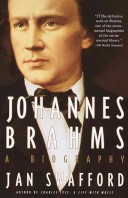
Perhaps because it's Labor Day, thinking about how the original meaning of the holiday has, like many others, been overlooked and forgotten in the end-of-summer celebrations, but I was reminded of this passage from Jan Swafford's wonderfully readable biography of Johannes Brahms. He mentioned the income Brahms earned from popular works like his “Lullaby,” something he'd initially composed for friends on the birth of their son, and how during the 1860s and '70s many things he'd composed – from the Hungarian Dances (piano duets written for the amateur market) to the Requiem (composed with amateur choruses in mind) – brought in sufficient income to provide “for an independent creative life few composers have ever enjoyed.” For comparison:

- - - - - - -
"Bach was employed by courts and churches, who worked him like a slave. Handel was a freelancer who went bankrupt several times before his comfortable old age. Haydn spent most of his career composing for one aristocratic family with whom he had the status of a servant. Mozart lived independently [of such patronage] but had to perform and teach for much of his income. Beethoven received support from the aristocracy and early in his career was a keyboard virtuoso. Schubert mostly lived off friends. For much of his life, Wagner existed largely by extracting funds and services from admirers, tradespeople and King Ludwig of Bavaria, and slipped out of town when creditors caught up with him. Robert Schumann had a small inheritance supplemented by paid positions, journalism and Clara's performing.

"None of those composers earned so extravagantly from publishing their works as Brahms did, and none except Wagner, in his fifties, reached the position Brahms reached in his thirties – composing what he wanted, when he wanted, prospering without ever accepting a commission to write a piece. By Brahms' time, a living like that had been made at least conceivable by the enormous growth of the audience for classical music and the tens of thousands of pianos in bourgeois parlors, all of them requiring material from light to heavy."

[Johannes Brahms (A Biography). Jan Swafford. Vintage Books 1997. excerpt, pp.344-345, 1999 paperback edition]
- - - - - - -

I'm not sure a “composers' union” would have brought about anything comparable to the protection of the working class, the institution of at least a minimum wage or to having health and retirement benefits, but I was also reminded of a story I'd heard a living composer tell an audience about how much he earned from his music.

It was back in the late-'70s when I was living in New York City and I attended a pre-concert talk, possibly a panel discussion, in which Elliott Carter (then pushing 70) mentioned that the one work of his that brought in the most income for him was his Variations for Orchestra, mostly from European concerts and radio broadcasts (he made a sly reference to the fact – even then – how unlikely it would be for an American classical radio station to air it).

(You can hear a student orchestra from Tanglewood perform this in 2008, here, conducted by Stefan Asbury.)

He mentioned how much the commission from the Louisville Symphony had been and how long it took him to compose it, completing it in 1955 after having sketched at it since 1953. He figured – given the time spent on it and the amount he was paid to write it – he was basically being paid something like $0.25 an hour. I don't recall exactly – the point is, it wasn't much money, even then.

At this point, Carter paused while we pondered this discrepancy between Art and Reality when he added, after once pointing this out to an audience, there was this bejeweled matron draped in furs who stood up and took him to task. “Mr. Carter,” she said quite aghast, “you mean to tell me you write for MONEY?!”

- Dick Strawser

Saturday, September 04, 2010

Two Cousins Write Clarinet Quintets

This post is part of my pre-concert talk given at GretnaMusic's September 3rd concert with the Cleveland Classical Players' performance of two clarinet quintets – Mozart & Weber – with Frank Cohen, principal clarinetist of the Cleveland Orchestra since 1976.

Update: interestingly, Concertante will be performing Mozart's Quintet and a quintet by Anton Stadler on the first program of their new season - 8pm, Friday Sept. 24th at the Rose Lehrman Center, Harrisburg Area Community College - along with Messiaen's Quartet for the End of Time.

Update to the Update: It turns out the source I'd seen for this performance by Concertante mentioned three works. But the website listed the Mozart as " Mozart's Clarinet Quintet in A, Stadler's Quintet"  which was then transcribed into the press release without the italics, making it look like they were also going to play a quintet by Stadler. Though Concertante is well known for discovering unusual versions of standard works or little known  and unknown pieces to add to their repertoire, there seems, alas, to be no Clarinet Quintet by Anton Stadler...

*** ***** ******** ***** ***

We often tend to think of music “in a vacuum” and sometimes even listen to it that way. It's easy to forget that real people wrote this music for real people to play – that what we consider “Art” was once the result of a human being not very different from us (except for this... talent) who for some reason decided to compose this piece we're listening to.

There is one very important connection between the two clarinet quintets on this evening's program, as it happens – and it's a family relation.

Carl Maria von Weber's father was Franz Anton von Weber (a poor military officer turned musician & opera impresario who had no real legitimate claims to the 'von' in his name). Franz Anton was the half-brother of Fridolin Weber, a bass who sang and worked as a copyist & prompter at various opera houses, especially in Munich where he raised four daughters, all trained as singers. One of them, Josefa, went on to become a famous soprano who would create the role of the Queen of the Night in Mozart's “The Magic Flute.” Another of Fridolin's daughters, Constanze, married Mozart – so, since she was a cousin of Carl Maria von Weber, that would make Wolfgang Amadeus Mozart and Carl Maria von Weber cousins-by-marriage.

But wait – there's more! Mozart died when Weber the composer had just turned 5. There had been a visit in Vienna when the not-quite-2-year-old Carl Maria von Weber played with the 4-year-old Karl Thomas Mozart, Wolfgang & Constanze's son. Constanze enjoyed the company of her aunt though Genovefa, her uncle's second wife, was actually 2 years younger than she was. As Jane Glover writes in her biography of “Mozart's Women,” Genovefa Weber became “somewhat elliptically entwined with the Mozart family.”

Because when Weber was 12, Genovefa brought him to Salzburg to study with another Salzburg court musician, Michael Haydn (younger brother of Franz Josef) who had been a colleague and friend of Mozart's and his father Leopold's. But during that time, she died suddenly of tuberculosis and, to help out her family, Constanze offered to have her buried in the Mozart family grave.

Now, a quick word about this grave.

Mozart died in Vienna where laws about burial practices were different – it was considered modern and ecological, given the limited amount of ground space available for cemeteries. Everybody except the aristocracy was buried in unmarked graves with 'economy coffins' to save on wood, a practice which gave rise to reports of Mozart's burial in an unmarked pauper's grave. Then, after a certain number of years, these graves were dug up, the skulls placed in crypts under the church and the rest of the bones reburied along the cemetery walls so that new bodies could be buried and... well, processed. This was not the situation in Salzburg where the Mozart family had a small vault at St. Sebastian's.

Now, you may remember that Leopold Mozart was violently opposed to his son's marriage to Constanze – he was convinced the whole Weber family was a pack of thieves out to steal the potential fortune his brilliant son would no doubt earn (but failed to do so).

In the Mozart Family Grave are buried Leopold, his mother-in-law (his wife, having died in Paris, was buried there, likewise in an unmarked grave), his grand-daughter Jeannette (Nannerl's oldest child who died at the age of 16) – but not Wolfgang himself. When Constanze remarried and then moved to Salzburg, she allowed Genovefa Weber, Carl Maria's mother, to be buried there – and then by the 1840s her husband, herself and two of her sisters who'd come to Salzburg to live with her. As a result, Mozart's sister Nannerl (who also never got along with Constanza or her family) decided she'd rather be buried somewhere else. So ironically, Leopold gets to spend eternity surrounded by a whole pack of Webers but no other Mozarts...

Mozart wrote his clarinet quintet in 1789 – the year after Toddler Carl Maria visited the Mozarts in Vienna – and Weber began his in 1811 when he was 25 though, because of a busy schedule and other commitments, it wasn't completed until four years later.

So though while only 22 years, basically, separate the two works, the fact one was written 11 years before 1800 and the other one begun 11 years after 1800 makes for a world of difference: for one thing, 1800 is a convenient but arbitrary dividing point between musical styles that had already begun to change toward the end of the 18th Century's Classical Era but would – at least as far as the music that has come down to us in the standard repertoire – change dramatically with the beginning of the 19th Century's Romantic Era.

For one thing, Beethoven happened: in 1800, he had finished his first six string quartets and written his first symphony – by 1803, when he wrote the Eroica, we tend to feel music was never the same. Though if you check what most other composers were writing at the time, that's not really the case – they, however, have not survived in the repertoire, most of them: Beethoven did.

So we have Mozart's Clarinet Quintet – all very decorously 18th Century in its classicism, well-balanced and abstract yet beautiful to the ear – and Weber's Clarinet Quintet of about 22 years later in its romanticism which might bring jovial Mendelssohn more to our minds than brooding Beethoven. Keep in mind, Beethoven wrote his far-from-brooding 7th Symphony while Weber was working on – or putting off finishing – his Clarinet Quintet. Weber's attitude towards Beethoven's 7th – with that famous repeated passage whipping up the end of the 1st movement – was that here, Beethoven was now clearly “ripe for the mad-house.”

There are two distinct differences you'll hear in these two quintets, almost back to back – Weber's Quintet is what you might call a “pocket concerto,” a showcase for the clarinet with the accompaniment of a string quartet. Who has the big tunes and much of the spotlight? Who's playing “chuck-chuck-chuck-chuck” accompanimental patterns supporting the melody? Mozart's was a more in-grained work of chamber music and though the clarinet is prominent, it is always “first among equals” (considering in most classical quartets, 2nd Violin and Viola were never equal to the other half anyway).

It would be very difficult to add something like a clarinet to a string quartet and make the clarinet subservient. Even when composers would add a piano which is more percussive to the strings' legato sound, the piano, by its legacy as an accompanist in sonatas and trios, can be both soloist and accompanist as well as part of the mix. It's not so easy with a clarinet. Mozart's sound-balance is very difficult to achieve – Weber, in a sense, took the easy way out.

The fact that there are only a few great Piano Quintets is also relevant to the idea of the Clarinet Quintet – at least as far as “great music” or recognized standard repertoire is concerned. Compared to the Piano Quintets by Schumann, Brahms, Dvorak and Shostakovich and maybe Cesar Franck (one that should be heard more often) as well as two by Fauré, there are really only two “great” Clarinet Quintets – the Mozart and... the Brahms.

Now, Brahms' Quintet is a late work of his – in fact, he'd come out of self-imposed retirement to write it – and ironically, it was composed 100 years after Mozart's death. Not only is it inspired by Mozart's quintet, you could say it's “modeled” after it so closely that, if you were to hear them back-to-back (or side-by-sdie), you would hear similar shapes and textures in the way Brahms opens his, compared to Mozart's opening. In the slow movement, Brahms even uses the same melodic shapes as Mozart's 1st movement opening, the same pitches transposed to a different key, a starting point perhaps but almost as if he were writing an homage. And yet it all sounds very late-Romantic and genuinely Brahms. In a drop-the-needle test with just a few seconds' sound-byte, however, it wouldn't be impossible for some to react quickly and get them confused.

In 2008, I heard the world premiere of a clarinet quintet by an American composer who would never be mistaken for either Mozart or Brahms. Yet when I heard Elliott Carter talking about this new work of his, he said he first studied the quintets of Mozart and Brahms before he began working on his own. Does that mean it's going to sound like either of them? No, not at all, but there are characteristics of theirs that “inform” Carter's approach to his new piece – the roles the different instruments might play, the ways they combine, in fact the different combinations you can make out of the different instruments.

Though this work may never enter the standard repertoire, it was very well received at its premiere which, by the way, took place shortly after the composer turned 99 – he had finished it three months before his birthday and apologized for not remembering all the details people were asking him about it: as he put it, “I finished it four months ago and I've written several pieces since then...” And pushing 102, now, he's written several pieces since then, including a new wind quintet and a song cycle premiered just a couple of months ago – sort of the balancing side for Mozart and Weber whose combined age is only 74... (Add Schubert to this combination, and the total would be 105 years.)

But thinking about the two quintets on tonight's program, I was also thinking about these other two I'd mentioned – the ones by Brahms and Carter. Why are there so few clarinet quintets? What brought these about?

I suppose it would be easy to point out that the great piano quintets were for the most part written by pianists: Schumann, even though by then he could no longer play, wrote it for his wife Clara, one of the greatest pianists of the century); Brahms and Shostakovich were fine concert pianists. Other than John Adams, I can't think of any major composer who was a clarinetist. Instead, Mozart, Weber, Brahms and Carter found their inspiration in the playing of great clarinetists.

When Mozart wrote his quintet, the clarinet was only a recent addition to the orchestra. Before that, it was primarily found in “dance bands” and hadn't yet evolved into what we know as the clarinet today. There was an early 17th Century Baroque instrument called the “chalumeau” which had basically just the lower register of a modern clarinet. By expanding its middle and upper registers around 1700, and the sound was so bright, it was called “the little trumpet,” the word 'Clarino' the Italian word for trumpet. Even though the instrument makers soon tamed this hybrid into the mellower sound we're familiar with, it still kept its trumpet-like name.

Though it was used in the opera pit, the clarinet was not standard in the orchestra until around 1790. Mozart used it occasionally in his last piano concertos and symphonies. In fact, because Vienna had such fine wind players, the wind writing in these concertos was a remarkable addition to the Mozart Sound. One of those wonderful wind players was a clarinetist named Anton Stadler, one of Mozart's Masonic brothers and a close friend who had arrived in the Imperial capital of Vienna around the same time Mozart did.

In the mid-1780s, Mozart was writing music to be played in the home of one of his more affluent friends, the botanist Nicholas Joseph von Jacquin, several pieces involving clarinet and the alto-member of the family, the basset-horn (which is neither a horn nor a dog with big brown eyes). In 1786, not long after he completed “The Marriage of Figaro,” he composed the so-called “Kegelstatt Trio” for clarinet, viola and piano – written to be played at the Jacquins. The piano was played by daughter Frantziska Jacquin (one of Mozart's piano students). Mozart played the viola and Anton Stadler, the clarinet.

A few months later, in January of 1787, the Mozarts went to Prague for the triumphant performances there of “The Marriage of Figaro,” traveling with an entourage that included Anton Stadler.

The next year, after a fairly fallow six-month period that involved an extended trip to Berlin in the hopes of finding work – or at least some remunerative performances and commissions – Mozart completed the Clarinet Quintet with Stadler in mind, entering it into his thematic catalogue on September 19th, 1789. Earlier that summer, for no reason whatsoever, apparently, he composed his last three symphonies in the space of about six weeks. And soon he would begin a new opera, “Cosi fan tutte.”

It was during these last years of his life that Mozart, dealing with frequent money problems – he was a genius as a composer, but like many, had issues with reality – was borrowing from his masonic brothers, especially the banker Puchberg. But when he had a little money himself, he would help out his friends, if possible, and we know he loaned money to Stadler around the time he was writing the Clarinet Concerto for him in 1791. Stadler, a struggling musician, had borrowed money from Puchberg before and the banker had to sue him for repayment in the mid-1780s.

In 1791, there was another trip to Prague, this time for the coronation opera, “La Clemenza di Tito.” Stadler went along as a kind of musical secretary but primarily as a ringer for the orchestra, playing the difficult clarinet part Mozart had envisaged for the opera. The main reason he chose not to stay in Prague professionally had to deal with the lack of a high level of talent there: Prague was, after all, a provincial capital without the international resources and fine players that were available in Vienna. Besides, most of the aristocracy who'd support the arts in Prague spent much of their year living in Vienna, anyway.

And so, when Mozart returned from the not quite so satisfying experience with “La Clemenza di Tito” (which the new empress called a “porchería tedesca” or “German swinery”), Mozart composed his Clarinet Concerto for Stadler who then premiered it in Prague on October 16th to great acclaim. Seven weeks later, after the premiere of “The Magic Flute,” Mozart was dead.

But Stadler favored his own hybrid version of the not-yet-standardized clarinet, extending the lower end of the range, something now called a Basset-Clarinet. The problem is, this instrument never caught on and when the concerto was eventually published after Mozart's death, someone arranged the part so the lowest notes could be played on the now-standard instrument. Ever the free-lance musician dealing with financial concerns, Stadler eventually pawned the manuscript score he owned, and so without Mozart's original copy, reconstructing it has always been conjecture.

But even in the Quintet, listen to how Mozart uses this lower range of the instrument. Stadler was actually the second clarinetist in the imperial court orchestra – his brother Johann played first clarinet – so his position gave him more opportunity to work on the lower register. Was Johann Stadler a better musician because he played 'first'?

A contemporary critic wrote of Anton Stadler's playing: “I would not have thought that a clarinet could imitate the human voice so deceptively as you imitate it. Your instrument is so soft, so delicate in tone that no-one who has a heart can resist it."

And since it was Anton who became good friends with Mozart, it was probably the friendship that had a great deal to do with the music he composed for him – not just “who's the best player around.”

*** ***** ******** ***** ***

Anton Stadler died in 1812, the year after Carl Maria von Weber, now 22, wrote two clarinet concertos and a concertino – and began a quintet – for clarinetist Heinrich Bärmann who at that time was about 27 years old. They had met in Mannheim while Weber was on a concert tour and he was much impressed with this fine orchestra's fine clarinetist. A few months later, Weber arrived in Munich for some performances at the opera there, and it was arranged for a concert of his music be performed before the music-loving king. It turned out their new clarinetist was Heinrich Bärmann and so in two-weeks' time, Weber quickly composed a short concertino for this performance in April.

It was such a success, Weber – in town to write a new opera – composed two full concertos for Bärmann – the first in May, the second in July – and he was at work on a quintet for clarinet and strings when his schedule took him back on the road. It wasn't until four years later that he and Bärmann met up again and so Weber decided to finish the quintet, completing it the night before the concert!

By this time, the clarinet had evolved a little further than it had been in Stadler's day: rather than just seven keys and old-fashioned finger-holes, the clarinet now had a more intricate system of keys like the modern instrument which allowed one to play faster and more intricate passages. The works Weber composed for Bärmann joyfully explore this expanded virtuosity. Such music would not have been playable 20 years earlier.

Other composers wrote for Bärmann, as well – Mendelssohn wrote two short concert pieces for clarinet and basset horn for him and his son in exchange for dumpling dinners – while Mendelssohn composed, the Bärmanns cooked, giving new meaning to the expression “Will Write for Food.” Gioacomo Meyerbeer, almost exclusively an opera composer himself, wrote a quintet for him as well as did many lesser lights who are now lucky to be footnotes in the history books. Like most virtuosos of the day, Bärmann composed a few works for himself including one that has long been attributed to the young Richard Wagner.

There is a charming connection, now, between Weber and Bärmann – and Brahms.

Though Brahms'd confessed he'd tired of the musical rat-race and retired at the age of 57, it was the sound of a clarinet that lured Brahms out of retirement the following year to write, eventually, four works that are masterpieces in the clarinet repertoire – first, in 1891 both the trio with cello and piano and then the quintet, and three years later, the two sonatas. And all because he'd first heard Richard Mühlfeld play Weber's F Minor Clarinet Concerto which had been written only because Weber was fascinated by Heinrich Bärmann's playing.

(In the photo above: critic Eduard Hanslick, left; Johannes Brahms, center; Richard Mühlfeld, right.)

To the late 20th Century, now... back in the '80s, I remember visiting a friend of mine in upstate Manhattan and listening to his next-door neighbor, a young clarinetist who had just joined the Orpheus Chamber Orchestra. Charles Neidich was playing Weber. He would later teach at Juilliard and become one of the most prominent clarinetists in the country. Unfortunately, I wasn't inspired to compose something for him nor would he have been likely to play it, either – but he has played a lot of clarinet music by Elliott Carter including giving the New York Premiere of the concerto Carter had composed in 1996 for Pierre Boulez and his contemporary ensemble in Paris. Hearing Neidich play it cemented a solid musical relationship, as much as a composer in his 90s hangs out with a bunch of performers.

On stage at the quintet's premiere, then, Carter talked about his new Clarinet Quintet which Neidich and the Juilliard String Quartet had commissioned from him, getting in line with everybody else who wanted a new piece by a man who was going to be very busy as he turned 100. It was the musicians' idea to approach Carter specifically for a quintet. When asked if he tailored the piece to suit the players' personalities, he said he was quite familiar with the Juilliard Quartet who've played and recorded all five of his quartets but he joked that “well, no, if you mean did I keep a photograph of Charlie on the desk while I was composing, no... A composer has to write for other performers than the one he's writing it for – other people have to play it, too.”

He went on to talk about certain technical things a player can do that he as a composer can make use of – one was Neidich's ability to sustain long tones in the low register, something the clarinet can do very well. So there's a section where the strings are playing certain moving figures in the upper register and in the bass are these long sustained tones in the clarinet, some of them stretching out for 20-30 seconds (as an example, check out 4:14 into this clip). So if another clarinetist who'd be interested in playing the piece can't handle that – what they call “rotary breathing” comes in handy, too – well, then it's just like someone saying “I can't play scales or arpeggios that fast.” It seems like the exact opposite of something flashy but it's a difficult technique and it makes an incredible sound when you hear it.

(The work was included in Bridge Records' Vol.8 of Carter's music, performed by Neidich & the Juilliard Quartet.)

So that's something in the way a performer can inspire a composer. This Clarinet Quintet also led to another new work Carter composed for Charles Neidich – a woodwind quintet which was premiered a few months after Carter turned 101. Perhaps next year, maybe he'll get around to writing him a sonata...

Anyway, those are some points to think about while you're listening to these two clarinet quintets – how the composers came to write them, who they were written for and who first played them – and how these ideas remain practically unchanged in the 220 years or so since Mozart wrote his quintet.

We can listen to this music as a work of art to inspire us with its beauty or as something to simply entertain us – but it's also interesting to think of the music as the product of a life, the result of friendships and the relationships that develop between real people, not just notes on a page.

It's the performers' responsibility to bring these notes “to life” – and it's ours to receive them and make them part of ours.

- Dick Strawser

Wednesday, July 28, 2010

Nickle & Diming the Arts

While Arts Funding has been slashed in Pennsylvania and across the country – it's always an easy target – this response to similar cuts in the United Kingdom is something perhaps American artists and arts groups should follow. Rather than go the moral and cultural and social high ground about the importance of Art which is then going to be cut anyway, why not present the Arts as an economic component of our community to show the disparities between the amount of government money supporting the Arts compared to the amount of government money supporting Business & Industry?

Perhaps someone with knowledge of our own local facts and figures could come up with the Pennsylvanian Equivalent of these British observations:

Arts Subsidies in Great Britain (that is, government moneys budgeted for the Arts) amount to 0.07% of the total budget's expenditures which in turn amounts to about 17 pence (roughly $0.26) per person per week.

This is basically “less than half the cost of a pint of milk” per person, depending on the market value of milk in this country or the rate of exchange between American and British currencies on any given day.

One of the big financial issues in the UK has been their equivalent of the Bank Bail-Out.

According to Mervyn King, the Bank of England governor, the size of the bank bailout is 'breathtaking' at close to £1 trillion. Not many of us even realise how big a trillion is. A million seconds takes 11.5 days; a trillion takes 31,709 years.”

If each person in Great Britain were to shoulder up this debt with a “one-off payment,” it would cost them “a mere £16,666.66.” Blogger Daniel Bye estimates that, at the rate of a ½ pint of milk per week, should keep a British subject in milk through the year 4780.

Other similes could be made in measurable terms: say, in height with “a small book compared to three Everests,” or in time with “how long it takes to read this paragraph compared to the time it takes to run the Tour de France (including sleep).” The popular media love making sports analogies so in this instance, we could kill two birds with one stone.

Since the British Cultural Secretary, Jeremy Hunt, thinks the Arts should look more to philanthropy for their support, wouldn't it be great if he and the other 21 millionaires in the British cabinet would ante up “the Arts Council's £58m grants budget, used to fund work by new and emerging artists”?

But then there is also the argument that perhaps the Arts can actually be economically feasible when you consider that, as the Department of Culture, Media & Sport (as it's known in Britain) responded to one blogger's question, in “2008, Arts Council England spent £100m on theatre [and] the VAT [Value Added Tax] receipts from London theatre alone were worth £75m.” How much additional tax revenue was generated by theatres outside London?

And of course, considering the corporate defense for Wall Street Bonuses or the recent get-away parachute of about $18 million handed to Tony Hayward of BP, how do these compare with the typical annual income of a free-lance musician or actor in this country?

It is, of course, easy to say “there is no more money” or that “we're trying to find money for education and health care” or that "I don't like classical music therefore it is not important," but does the cutting of a comparatively small amount that severely wounds the Arts in our communities make a viable argument?

Even conservative politicians would have difficulty buying a strategy that cuts something that at least makes money.

Saturday, July 17, 2010

Parody: Ur Doin' It Right

Okay, so I saw a friend of mine on Facebook found this "I Write Like" analyzer which informed her she wrote like (take 1) David Foster Wallace, (take 2) Stephen King and (take 3) Arthur C. Clarke.

So I had to try it and plugged in a short excerpt with dialog from the latest installment of "The Lost Chord," my music appreciation thriller parody of Dan Brown's "The Lost Symbol."

And it told me...


I write like
Dan Brown
I Write Like by Mémoires, Mac journal software. Analyze your writing!

Woo-hoo!!! 

At the New York Times' "PaperCuts Blog," blogger Jennifer Schuessler found out she writes like Edgar Allan Poe. But then a colleague plugged in an excerpt from Poe's "Fall of the House of Usher" and was told he writes like Arthur Conan Doyle.

(If you're curious, I typed in an excerpt from "The Lost Symbol" and was told that Dan Brown writes like Dan Brown.)

Anyway, given the premise of "The Lost Chord," I am perfectly satisfied with this result!

Friday, July 09, 2010

A Glimpse of Glazunov with the Cypress Quartet, July 14th

Alexander Glazunov is not a well known or highly respected composer today: he is more remembered as the alcoholic conductor who ruined the premiere of Rachmaninoff's 1st Symphony and as an old-fashioned past-his-prime relic who ran the St. Petersburg Conservatory in the years around the Bolshevik Revolution before falling out of favor with the new Soviet ethic.

Yet in Russia in his day, he was regarded as a major composer, a prodigy who'd written his first symphony when he was 16, the darling of the nationalists until he became too much a cosmopolitan academic. Today, his ballet “The Seasons” survives in a dance world starved for works from the Golden Age of the Russian Imperial Ballet, his Violin Concerto (once very popular) is still occasionally heard in the concert hall, though in this country few of his symphonies or string quartets are ever dusted off.

The Cypress Quartet is returning to the midstate for the Pennsylvania Academy's “Vivace!” Festival, held in and around Lititz this summer, and on their performance next Wednesday (July 14th at 7:30pm, Lititz Church of the Brethern at 300 W. Orange Street, Lititz PA) they'll be playing Claude Debussy's Quartet and Jennifer Higdon's Impressions on a program that also includes the first two Novelettes by Glazunov, from a suite of five pieces he composed around the time he wrote his 2nd Symphony which he dedicated to the memory of Franz Liszt and began his 3rd String Quartet.

(You can download a free copy of the score and parts here.)

The title, Novelettes, as well as the dedication of the 2nd Symphony, indicate part of the “problem” of Glazunov and his generation. Considered the “Second Generation” after the handful of Russian Nationalists known as “The Five” – Balakirev, Borodin, Rimsky-Korsakov, Mussorgsky and (oh yes) Cesar Cui – and the more internationally accepted cosmopolitans like Tchaikovsky and Anton Rubinstein, Glazunov and his contemporaries fell in between the cracks of their teachers and then their students – Rachmaninoff, Skryabin (or, if you prefer, Scriabin), Prokofiev and Shostakovich.

Glazunov's style is usually regarded as a mix of his mentors' nationalism with a dash of the romantic aura of Orientalism (perhaps most famous in Rimsky-Korsakoff's “Scheherezade”) combined with the cosmopolitan absorption of Western European elements also heard in Rubinstein and Tchaikovsky that in itself was a kind of mash-up of Liszt on the one hand and Mendelssohn on the other.

“Novelettes” is a title straight out of Schumann, who'd died 30 years earlier – short pieces inspired by something vaguely literary, along with the “ballades” of Chopin or Schumann's short character pieces inspired by E.T.A. Hoffman (Kreisleriana, Papillons). His “Novelettes,” a collection of eight piano pieces published in 1838, tell no specific story but have a “literary quality” about them, despite any direct narrative: no story is supplied, the pieces lack any fanciful titles beyond tempo indications and a generic mood (“Lightly and with Humor”).

It's probably not entirely coincidental that Schumann's father was a book-seller and Glazunov's was a publisher.

A novelette, by the way, was a once popular alternate term for a “novella” or short novel, somewhere between a short story and a full-fledged novel. One source suggested it was decided more by word-count (7,000 to 17,000 words) than by the nature of its content. Later, in the 20th Century, given the attitude about size and quality, it became a derogatory term implying triteness or sentimentality, or a “not-quite-ready-for-prime-time” novel.

Glazunov's approach to the title might be more “what the heck do I call these five pleasant little pieces?” than emulating Schumann or deciding to offer some vague literary allusions. If anything, they're mood pieces in various styles and whether the similarity in the material is conscious (as in “theme and variations in different styles”) or an accident of their all being composed quickly at the same time, I'm not sure (nor am I sure it really matters).

The first is marked “In the Spanish Style.” The second is subtitled “Orientale.” The third is called “Interlude in an old style,” evoking perhaps Russian Orthodox chant but in a highly romanticized arrangement, complete with a very non-Russian fugue (speaking of Western academicism).

The fourth one is a Waltz and is typical of Glazunov's ability with a lush (as in luscious) dance tune from the golden Imperial Age of Russian ballet. It concludes with a Hungarian Dance.

Rather than plumbing the depths of musical thought – as might be expected from a medium where Beethoven's Quartets are usually lurking just off-stage – these pieces were composed for a party given by Glazunov's patron, the industrialist Mítrofan Belyáyev who bankrolled many projects for Russian composers in St. Petersburg.

This is, basically, Glazunov at the age of 20 or 21. (Incidentally, the portrait at the top of the post is by Ilya Repin, painted the following year.) Glazunov composed with legendary facility and his music was generally greeted without much concern or controversy (beyond the initial debut when people refused to believe a 16-year-old could write a symphony like that and accused his well-to-do parents of paying someone to write it for him).

But around the time he turned 40, this ease came to a grinding halt. Part of this may have been the responsibilities of taking over the St. Petersburg Conservatory from his mentor Rimsky-Korsakov in 1905 after he ran afoul of government during the political upheaval that almost became a revolution. His alcoholism worsened – though it had already played a very likely part in the disaster of Rachmaninoff's 1st Symphony in 1897: it was enough that he didn't care for the piece and made comments about not understanding it. He was finding himself a man-out-of-touch with what was going around him, musically.

In the 25 years from his first published works to the 1905-1906 Season when he completed his last symphony, there are 85 opus numbers in his catalog. In the remaining 30 years of his creative life, there are only 24 works, mostly inconsequential by comparison even though they include both his piano concertos (the 2nd, in B Major, is one I've always liked and wondered why no one plays), the last two string quartets (the last one, subtitled “Hommage au passé”) and the Saxophone Concerto which one occasionally hears as much because there aren't many Romantic-style concertos for the instrument (despite its being composed in 1934) as it's the last major work he composed.

If his teaching responsibilities didn't have a serious enough impact on him – whether or not the alcoholism was a symptom or a contributor to his creative decline – the political and social climate of the new 20th Century certainly undermined everything he as a conservative held dear, both socially and musically. Though he stayed after the Communists took control of the government and lived through the privations of the 1st World War, the two 1917 Revolutions and the ensuing Civil War, he never really regained the status he had enjoyed as a young man in the Imperial Age.

When he left the Soviet Union for the West, he did so “for reasons of health” rather than as a political refugee like Rachmaninoff, Prokofiev or Stravinsky: if nothing else, this allowed his music to still be performed “back home.” But he spent the last eight years of his life as an exile in Paris, a man without a country (or even a culture) and, ironically for a man as “cosmopolitan” as he was, musically, little musical inspiration.

He was deeply suspect of New Music at the time. He told a colleague that Stravinsky's Petrushka was not music though skillfully orchestrated. Looking at Debussy's “Prelude to the Afternoon of a Faun,” he thought it was “orchestrated with great taste,” then wondered “Could it be that Rimsky and I influenced the orchestration of all these contemporary degenerates?”

Dmitri Shostakovich, the leading symphonist of the Soviet era, owed a great deal to Glazunov the teacher and administrator. His recollections in Semyon Volkov's highly questionable memoir, “Testimony,” include stories of Glazunov's legendary memory.

We owe the Overture to Borodin's Prince Igor to that memory since Borodin, a busy chemist and professor as well as composer, did not live to complete the opera or jot down anything for the overture. He'd played through it at the piano for his friends: Glazunov had heard one of these performances and was able to write it down later.

Another story was how the composer Taneyev had come to Belyayev to play his new symphony at the piano for him: meanwhile, the teen-aged Glazunov had been hidden in an adjacent room, listening to the performance. When it was over, Belyayev called Glazunov into the room as if he'd just arrived and said, as it happened, this young man was going to play through his new symphony as well. And he sat down and played Taneyev's symphony back to him, note for note.

While there is also the famous story of Glazunov keeping a bottle of vodka in his desk drawer, a rubber hose hidden in his coat connecting to the bottle so he could sip on it during his lessons, it's perhaps kinder to end with the fact – whatever he thought of “new music” – Glazunov arranged the premiere of his student Shostakovich's 1st Symphony with the Leningrad Philharmonic in the same hall where his own 1st Symphony had been premiered 44 years earlier and had created just as much of a stir when the teenaged composer walked out on-stage to accept the cheers of the audience.

- - - - - - -
(here's my 'review' of their performance of Debussy's String Quartet from a 2008 concert at Lebanon Valley College)

Wednesday, June 16, 2010

Bloomsday 2010

Who is that reading James Joyce's Ulysses?  
- - - - - - -

BELLO
(savagely.) The nosering, the pliers, the bastinado, the hanging hook, the knout I'll make you kiss while the flutes play like the Nubian slave of old. You're in for it this time. I'll make you remember me for the balance of your natural life. (His forehead veins swollen, his face congested.) I shall sit on your ottomansaddleback every morning after my thumping good breakfast of Matterson's fat ham rashers and a bottle of Guinness's porter. (He belches.) And suck my thumping good Stock Exchange cigar while I read the Licensed Victualler's Gazette. Very possibly I shall have you slaughtered and skewered in my stables and enjoy a slice of you with crisp crackling from the baking tin basted and baked like sucking pig with rice and lemon or currant sauce. It will hurt you.

(He twists her arm. Bloom squeaks, turning turtle.)

BLOOM
Don't be cruel, nurse! Don't!
- - - - - - -
James Joyce: Ulysses (p.532-533Modern Library Edition 1992)

Yes, it's June 16th again – Bloomsday! The day on which the action (if that's an appropriate term) in James Joyce's novel Ulysses originally took place in 1904.

And around this time of year, I try to read a little more of the novel. I'm not making much progress, over the years, sometimes barely remembering Bloomsday itself, but last week, I picked up my copy again and started where I had left off last year – p.424 – and last night made it to p.533, the passage quoted above.

I am now into one of the longer stretches of the book (it continues to p.609), the end of what Joyce marked as Part II and which, by those dividing the novel according to Homer's epic, is referred to as “Circe.”

For those who read a few lines and then think "shouldn't I be reading something that makes sense?" there's always Cliff's Notes... Here's their rendering of "Circe."

It is written as a “play-within-the-novel” complete with costume and character descriptions as well as stage action, but it is a surreal (or at least more surreal than normal) description of the late-night passage of Leopold Bloom and another main character, Stephen Dedalus, through a bawdy section of town known as “Nighttown,” including a visit to the local whore-house. In fact, the scene above takes place in the parlour: Bello originally appeared as Bella Cohen, “a massive whoremistress... dressed in a three-quarter ivory gown, fringed round the hem with tasselled selvedge, and cools herself, flirting a black horn fan like Minnie Hauch in Carmen”) but changed gender somehow after Bloom had a diaglogue with the fan and then the heel of her foot, subsequently changing gender himself. In the inner reaches of his mind and imagination, so far in this play, he has been brought up before the court as a pervert for writing nasty letters to women of social standing (replete with masochistic asides), sent off to be executed, then crowned ruler of Ireland and becoming increasingly god-like (“Bloom assumes a mantle of cloth of gold and puts on a ruby ring. He ascends and stands on the stone of destiny... The peers do homage, one by one, approaching and genuflecting”) before he is pilloried for being a womanizer and set on fire but, it turns out, this is all a 20-page fantasy going on in his mind while he's berating Zoe, one of the prostitutes, for smoking a cigarette.

You can read two previous Bloomsday posts - 2008 and 2009.

WBAI continues its 32-year tradition of live on-air celebrations of Bloomsday. In fact at 10pm EDT, you can hear the “Circe” chapter with female impersonator Charles Busch taking on the role(s) of Madame Bella Cohen.

The broadcast, which includes related poetry and songs as well as readings of Joyce's letters to his lover Nora who inspired the character of Bloom's wife, will end with Molly Bloom's soliloquy (performed by Galway native Caraid O'Brien) as she's lying in bed, thinking about her lovers, her husband, her children and her stalled artistic career. It's 45 pages of Joyce's classic “stream-of-consciousness” but contains only eight sentences.

WNYC will also broadcast its own celebration of Bloomsday live from the Symphony Space on Broadway where Stephen Colbert will be one of the readers (in a New York Times article, Mr. Colbert admitted in an e-mail message that “Performing ‘Ulysses’ on Bloomsday at Symphony Space is the only way I’ll ever finish the damn book”)

It also begins at 7pm and will include several excerpts from the book as well as parallel passages from Homer's Odyssey.

Though Molly's orgasmic monologue (“performed by Fionnula Flanagan in a prodigious performing feat that lasts two and a half hours.”) will occur (unedited) well after midnight, the station mentions that “James Joyce’s classic novel, Ulysses, contains language and concepts that may not be suitable for younger listeners.” (No doubt...)

But it does remind me of the famous United States District Court case when obscenity charges were filed against the periodical in 1922 after they had begun serializing excerpts from the book four years earlier. The court's lawyers described the book as being "the work of a disordered mind," but that was another matter... Anyway, the initial trial delayed the publication of the complete book in the United States until 1933 when Random House challenged the decision in court. Judge John Woolsey wrote in his decision that while using familiar "old Saxon words," the work was not intended to be obscene according to the laws of the United States since it did not intend to titillate and "nowhere does it tend to be an aphrodisiac" (I am trying to imagine a whole generation of American boys growing up with wild sexual fantasies resulting from their reading James Joyce's Ulysses...). Within minutes of hearing Judge Woolsey's ruling, Random House began preparing the first publication of the work which became available in January, 1934, twenty years after Joyce began writing the novel and almost 12 years after it was first published in France by an ex-patriot publisher.

You can find out more about Bloomsday on Broadway at symphonyspace.org and you can listen to it on-line, starting at 7pm EDT, at wnyc.org.

Incidentally, if you're not one to try reading it yourself, there's a complete audiobook edition from Naxos read by Jim Norton and Marcella Riordan (there was an earlier abridged edition released in 1994, so be sure you get the unabridged recording released in 2004). It's 22 CDs and takes over 27 hours to listen to so I'm not sure you'd want to try it all in one sitting. The "Circe" Chapter I mentioned above begins at Disc 13, cut 6 and continues through Disc 16, cut 8.

So a Happy Bloomsday to all and to all, good reading (or listening)!

In the photograph, btw, that's Marilyn Monroe, reading Molly Bloom's soliloquy from James Joyce's Ulysses.

- Dr. Dick

Monday, June 14, 2010

The Lost Chord: Finishing the Rough Draft

UPDATE: You can now read the novel as it's serialized on this blog.

Yesterday, I finished the rough draft of “The Lost Chord,” my musical parody of Dan Brown's “The Lost Chord” – a total of 473 pages and 183,365 words. Officially, I started writing it on November 1st, 2009, and finished 64,038 words as part of the NaNoWriMo Challenge, to write 50,000 words of a novel during the month of November, National Novel Writing Month. I kept going for a couple more days and then put it aside to get back to work on the song cycle I was composing at the time, “The Other Side of Air.” When that was finished on March 1st, I decided to return to the novel and, with any luck, finish it but without the daily tally of words working toward a monthly goal. Working fairly steadily on it, though sometimes reaching a speed bump here, a brick wall there, sometimes taking a day or three off to allow things to gestate, I managed to complete the first step of the process of writing a novel yesterday morning.

Now that the rough draft is done, it's time to go back and do a few re-writes – filling in a couple of sections where I left minor details go or where, as things tend to evolve when characters begin to develop more on their own, going back to correct some details or clarify some back-story. Then of course there's the issue of simple editing – finding a better word, tightening up a phrase, fleshing out one thing or trimming the fat off another, making sure the characters' names are spelled the same way, the eyes haven't changed color and that verbs agree with nouns.

Soon, I will start posting it on-line at Thoughts on a Train where it will be accessible through a special link, a page that will include just the installments of the novel. There will also be “continued from” and “continued to” links in each post for ease of navigation so if you miss a couple of posts, it will be fairly painless to catch up.

There are 24 chapters in all but some of them are quite long. I'd like to keep the posts between 2,000 to 5,000 words each, so the chapters will be broken up into more convenient post-sized segments.

And what if you haven't read Dan Brown's “The Lost Symbol”?

Never fear – I tried to make my story complete in itself so that you can still follow it as a story on its own. Of course, the element of parody – and not just with Brown's novel – is very strong throughout, so if you have read it, you will enjoy another element of it beyond the surface level of the story.

The Schoenberg Code,” my serial novel in 12 chapters about a serial killer inspired by a secret message found in a score by a serial composer, was a parody of Brown's earlier “The Da Vinci Code,” the element of parody was more broad: his story suggested a parallel story that loosely followed the original plot. That parody – only about 45,000 words – was written differently, as well: the first chapter (originally all I had intended) was a spoof of the novel's opening scene and the movie's trailer, but several people enjoyed it so much they said I should do the whole story. So over the course of the remaining weeks before the movie came out, I wrote the rest of it on the installment plan, reading a few chapters and then turning that into my parody of it, posting each chapter as I went along. So basically, I had no idea how the novel would end until I got there.

With “The Lost Symbol,” I read the whole book – got it the day it was released and finished it in less than four days – then started outlining it, chapter by chapter (and there are 133 short chapters plus a prologue and epilogue, a challenge to keep track of but convenient for short attention spans and for converting into a film script). However, I was busy working on the songs at the time and didn't want to put that aside until I could safely take a break, and that coincided with National Novel Writing Month which began on November 1st. The curious thing, the story takes place on November 4th, so there were details I would need to know which hadn't happened yet. Of course, now, seven months later, I'm trying not to include details that have happened since then – nothing topical either in the arts or in the current news – because, looking back on the day it took place, all that would be in the future.

As I was reading the book, I took some notes, jotted down some ideas, came up with some plot points and character names. Though all the main characters are fictional, I knew once I got to the chapters with the old, blind Dean of the National Cathedral, a very key figure in the unwinding of the plot, I would make an exception. While almost everybody and everything in Brown's novel would have its “musical equivalent” in my version of the story, and instead of Masons and masonic mysteries I would be dealing with composers and musical secrets, the elder Mason at the cathedral would become senior composer Elliott Carter who, a month later, would be celebrating his 101st birthday. The scenes with him involve two new compositions he was working on at the time- the wind quintet “Nine by Five” which was eventually premiered in February of 2010 and the song cycle “What Are Years” which will be premiered later this summer. At the time I was writing the scene with him, the quintet had just been premiered and while I knew the song cycle was being premiered, I didn't know when it was written. As it turned out, I found a reference to it that he was working on it in November and December, so I went back and altered a detail that involved a flash of inspiration that was originally to go into the quintet but now became something “for a new song cycle.”

And of course, I didn't want to put words in Mr. Carter's mouth where the conversation around the plot-points focused on composition and creativity, so I adapted ideas and lines found in numerous interviews – of which there were many during his Centennial Year – and found additional details about the setting from Frank Scheffer's wonderful documentary on the composer, “A Labyrinth of Time.”

This shows the composer at work at his desk with frequent glances out the windows of the apartment he'd lived in since the mid-1940s with its skyline view including the World Trade Center and then, later, somewhat ominously, without it. In terms of what a composer's work-space would look like, there was factual documentation. In terms of a realistic location, I didn't want to give away Carter's actual address, of course – unlike Brown who sets up his novels with the accuracy of a tour-guide, down to the street addresses (the unnamed building which later becomes an important plot-point is introduced on page 1 as a “colossal edifice, located at 1733 Sixteenth Street NW in Washington D.C.”) – but I knew about where it might be located from information in the DVD or in other sources that referenced it on-line. I only needed some vague mention of neighborhoods and subway lines that would get my characters within a few blocks of it.

While the premise of my parody is often comedic – with sub-parodies from the Marx Brothers' film, 'A Night at the Opera' or a reworking of Abbott & Costello's “Who's on First” routine, not to mention most of the characters' names – it also gets into a serious story, discussing creativity and how composers might compose. As Brown gives many historical details about the ideas or buildings involved in his story, there are many details about mine that make it reasonable for someone who enjoys classical music to gain some insights into this whole mystery of creativity. Some of it is told with the same obfuscatory sense of mumbo-jumbo Brown sometimes employs but also, hopefully, with some illumination behind it so a reader might actually, well... appreciate the music a little more.

And if not, all is not lost: the names might appear kind of silly, but not understanding them doesn't mean you wouldn't get what's going on. I'm not a fan of the kind of “pop culture reference” – especially the dated ones – where names or facts are tossed off and if you don't get it, you're like “what the hell was that all about?”

Oh, and speaking of “what the hell,” thats' one of Brown's vastly overused locutions throughout the book. Some critics also complained about his use of italics which they seem to think was meant for emphasis but which anyone reading with half a brain (preferably their right brain) would realize were un-voiced thoughts. I mean, what the hell did they really think was going on, here?

One of the parodies, of course, is my hero. Since “The Schoenberg Code” was a kind of “Dr. Dick Mystery” where Brown's symbologist Robert Langdon was turned into my “altered ego,” Dr. Dick, I ended up continuing the role in the newer novel. In a way, the Dr. Dick in these novels is a caricature of myself, the know-it-all fact-dropping pseudo-intellectual 'expert' that began life when I was a grad-assistant at the Eastman School of Music and developed further while I was teaching at the University of Connecticut, long before it was turned into my on-air persona when I worked for the local public broadcasting station here in Central Pennsylvania. Curiously, he never actually succeeds in accomplishing anything during the course of “The Lost Chord,” much less actually in solving the mystery, but then much the same could be said for Don Giovanni in Mozart's opera, but I digress...

In Brown's novel, Robert Langdon quipped to a student that “googling was not the same as research,” so naturally I used Google and plundered Wikipedia for practically every detail in my story that was not based on personal memory or first-hand knowledge. This involved what was going on in New York the night the story takes place – everything from the Yankees winning the World Series to watching video scenes from 'The Barber of Seville' or 'A Night at the Opera,' to checking maps and looking at google-cams for street views around Lincoln Center. Considering my experience in New York City since I lived there between 1978 and 1980 was limited to a very few visits since then (and other than the occasional concert run-in, so to speak, only one extended visit since 2001), I needed not only to refresh my memory but also to up-date it with what a current visitor in the city might see. At one point, I referenced a building in the Columbus Circle area that I remembered well, having walked past it frequently before, only to discover in an article about something else completely that the building in question had been torn down some 25 years ago...

On May 15th, I made another of those quick in-and-out day-trips, this time a locally organized on-your-own bus-trip that happily coincided with a performance of Alban Berg's “Lulu” I wanted to see at the Metropolitan Opera House. I met my friend Dan who guided me around Lincoln Center in the brief time we had before and after the performance, who pointed out what was new and different in the on-going restorations there but also remembering “this wasn't open in November” or “I think that was already done by early November.”

We checked out the block where I'd originally planned on locating the villain's brownstone but once I saw it, I realized there were so few of them there, it would almost be like giving the address – not that I would expect fans taking “The Lost Chord Tour” would be bothering people who lived in the only brownstone on that block. But, in walking back to Broadway, we checked out a block of W.69th Street. Here were a whole bunch of brownstones including a few that were not brown but gray which prompted Dan to say “so you could call it a flintstone instead” – perfect, considering one of my villain's many disguises was the composer Dr. Iobba Dhabbodhú!

Since the street-cams always showed details I needed covered by a passing city bus or a parked moving van, there were things I had to check personally. One of those was Verdi Square which I didn't even know had been Verdi Square all those times I walked past it at 72nd & Broadway! Looking at the map, I had assumed there was an entrance to the park on the southeast corner, so there was a very major clue that I set up with that in mind. Well, I was very disappointed that the park itself is actually so small, it's just a plot of green (more daffodil leaves than grass) completely fenced in by a wrought-iron railing so the whole idea of having someone going in to walk around the park and the Verdi statue was impossible.

There were also things that were completely inaccurate, due to lack of on-line information: the maps I found about the “concourse” level of Lincoln Center still baffle me since I think there were references to the Lincoln Center corporate offices being located under the fountain and there were blocks underneath the various buildings that were either basements of those buildings or a whole underground system of storage rooms (one article mentioned a Met rehearsal room on the third basement level). So I created this whole subterranean network of storage pods and scene shops that, if they didn't exist, should have.

When I found mention that the actual scene-building shop was on the fourth floor above the Met stage, I had to convert the shop I'd created underneath the Met lobby area into a scene storage room where already completed sets for up-coming productions were held until they were needed. So it will take a little bit of rewriting to bring it closer in line with what might be reality. There wasn't time to take a back-stage tour to get the official lay-of-the-land but I figured, what the hell – some things would be more visible as verisimilitude and others, less important, could be fictionalized. Considering what was going to be happening in this story, how likely was it someone would say “this couldn't have happened” because there were no storage facilities or empty space for LauraLynn's research lab underneath the Met?

And I didn't really want to start e-mailing the information desk at the public library next to the Met, asking about things like “is there access to the Met's roof” (where a violinist had been murdered back in 1980, so obviously, yes there was, but how would one get there?) or “would it be possible to knock out part of the Met's back wall along Amsterdam Avenue using a small bomb exploding in the basement?” Even if I tried to explain what I was doing, how long do you think it would take for the FBI to show up on my doorstep?

As it was, after I took a quick walk through the first floor of the library there, I said to Dan as we left through the lobby, “great – they even have a freight elevator right there” but which could, I imagine, have been misunderstood by the security guard standing behind me. Fortunately, I hadn't added something like “to get the body down from the roof”...

Now, I'm sure Dan Brown spent lots of time doing research – perhaps even had a staff of researchers running down such details for him – but part of the fun of writing this was finding all the information I needed on-line. It was also interesting to realize, even though I'm not writing historical fiction which ought to have some semblance of factuality in its locations, how much I really should have been paying attention to such things when I was walking around there. It would be so much easier just to create an entirely fictional city as I'd tried to do in an early and still unfinished novel.

Still, having read Brown's book through once and then rereading each chapter as I was preparing my parody, I still wasn't sure how the story would actually end – I mean, what the musical equivalent would be of this segment or that idea.

At one point, though it had no parallel in Brown's story, I interpolated a scene that was parodied from James Joyce's “Ulysses.” This may seem a far stretch, considering the pop culture references or the general populist nature of Brown's books. But as I had already turned one climactic scene into a parody combining the interview between the Devil and the fictional composer Adrian Leverkühn in Thomas Mann's “Dr. Faustus” along with the famous chess game with Death in Bergman's “The Seventh Seal,” at some point I needed something to be going through the villain's mind as he was preparing for the high-point of the story, the dastardly deed itself (so to speak) but which, in an interesting turn, could be considered a mash-up of things going through three different characters' minds at the same time. The line in Brown was a Latin phrase – “Verbum significatium, verbum omnificum” – but what popped into my head, needing something musical, was actually a line from James Joyce – “the ineluctable modality of the visible” – which I turned into “the ineluctable tonality of the audible.” This famous line begins what is actually the 'third chapter' of “Ulysses” called 'Proteus' by editors pointing out the parallels between Homer's “Odyssey” and Joyce's day-in-the-life of Dublin, June 16th 1904.

Now, as it turned out, Proteus is a shape-shifter, the Old Man of the Sea in Greek mythology. Considering all the transformations the villain undergoes in Brown's story, a reference to Proteus seemed rather apt though not something I'd care to over-do. (Another coincidence: my villain is also known as Tr'iTone after the musical interval often called 'The Devil in Music' and Proteus is related to the Tritons of Greek myths.)

More importantly, one of the final moments involves Langdon's epiphany with the phrase, “E pluribus unum.” Even as I started writing that chapter, I still had no idea how I would parallel this line. Eventually, I brought back the ineluctable tonality of the audible, turning “tonality” into a term that was usually misunderstood from its original meaning (however specious it might be in my instance), as Brown had pointed out with both “apocalypse” and “atonement.”

Another crucial elusion – that is, something that continued to elude me up to the very last minute – was Brown's “The secret is knowing how to die” which figures not only in a key scene between the villain and his chief victim, but is actually the opening line of “The Lost Symbol.”

I think I had taken a two-day hiatus from writing “The Lost Chord” while I tried to figure this out before I could move ahead. In the midst of something else entirely, it occurred to me how the 19th Century imagined the “suffering artist” – Beethoven going deaf, Schubert dying at an early age – when I realized my line should be “the secret is knowing how to suffer.”

Having now gotten over several log-jams blocking the ending of the book, I was finally able to finish the epilogue – which still took several days because, as a summary of many of the philosophical aspects concerning creativity in my book, it was trying to turn itself into a summary of Alex Ross's “The Rest Is Noise” – and then go back to write the brief prologue.

And so it has come full circle.

And today I'm sitting here realizing "I just finished writing a novel!" What the hell...?

Friday, May 21, 2010

Arguing for the Arts: Advice from Britain

After attending rehearsals last night for Vaughan Williams' "A London Symphony" which the Harrisburg Symphony will be performing here this weekend, I find this bit of news from Across the Pond important advice for American arts organizations who will be facing state budget battles regarding support for the Arts.

Alistair Smith's article posted Wednesday at Britain's The Stage:
- - - - - - -
Arts Council England chief executive Alan Davey has called on the cultural sector to help it make a “rational” argument to government about the importance of funding for the arts, in order to avoid heavy cuts in this autumn’s spending review.

While frontline arts organisations look set to avoid significant cuts from the £66 million in savings that the Department for Culture, Media and Sport will have to find from its 2010/11 budget because of spending cuts across government, it will not be known until later in the year how arts budgets will be affected from 2011/12 by the change in the country’s leadership.

Following June 22’s budget, the Conservative-Liberal Democrat coalition will undertake a Comprehensive Spending Review, with the results expected to be revealed for the DCMS and the arts council in the autumn.

Davey said he believed that whatever government had come to power in the elections, there would have been a “hard case to make” for the arts because of the fiscal climate, but called on the sector to help ACE make that argument.

“You have to argue as hard as possible, but not be unrealistic about the outcome,” he told The Stage. “[The sector] is helping because we are talking to them and they are talking to local politicians and making the case to politicians generally, so everyone is getting the message that arts spending is good spending, it’s hard-working spending, and it’s important to the life of the country. It’s not a trivial thing or an optional add-on that’s nice to have.

“I think although that argument been won to an extent, we mustn’t sit on our laurels, we have to keep making that argument and justifying it, and given that spending overall is so tight, it’s going to get harder and more important to do it. The way the sector can help is to help us make rational arguments and make the arguments themselves. What clearly doesn’t work is shroud-waving.”
- - - - - - -

While 'shroud-waving' may get our lawmakers' attentions (even for a limited span), facts and figures speak louder than shrouds (banners, to the Brits).

I also love their naming this council the "Department for Culture, Media and Sport." While lumping Culture and Sports into the same bucket may seem strange to an American (many of whom would wonder why the Arts are included in the first place), at least the ordering reflects the long-range priorities of our society.  

Gear up - it's going to be a long summer if past budget cycles have been any indication...

- Dick Strawser

Thursday, May 20, 2010

Robert Schumann's Installment Plan Concerto

This weekend, you can hear the Schumann Piano Concerto on the program with Daria Rabotkina and the Harrisburg Symphony conducted by Stuart Malina at the Forum, Saturday at 8pm and Sunday at 3pm.

I thought it would be interesting to look at all the different things that were going on in Schumann's life - actually, his and Clara's lives - during the years between his writing what became the concerto's first movement and then finally adding the last two movements four years later.

Considering I'm the kind of composer who spends a year working on a string quartet and two years on a symphony, it boggles the mind to see Schumann sketching a symphony IN A FEW DAYS and then taking maybe a month to orchestrate it or writing three string quartets in the span of seven weeks...

It's been very pleasant coming back to this piece after not having heard it for two years. There's something about not hearing a piece every month or so, then coming back to it after a long break where you can hear it afresh.

Anyway, you can read my "up-close & personal" post at the Harrisburg Symphony Blog here.


- Dick Strawser

Monday, May 17, 2010

Off to 'London' This Weekend: Vaughan Williams in Harrisburg

This past weekend was great - I took one of those bus day-trips into New York City which just happened to coincide with the last performance at the Met this season of Alban Berg's Lulu which I'd been blogging about prior to its radio broadcast the week before. Hopefully, I'll get around to writing something about it soon.

This coming weekend is the final "Masterworks Concert" of the Harrisburg Symphony's current season which features a work that has been a favorite of mine since my days in high school many (many) years ago: "A London Symphony" by Ralph Vaughan Williams.

So I've written two posts over at the Harrisburg Symphony Blog. The first one is about the concert and the symphony itself, including photos and some performance videos, including a quite good one with an All-State High School Orchestra I'm assuming is from Georgia (it's only labeled the GMEA All-State). The second is a more personal recollection of the symphony and how one phrase never fails to bring a tear to my eye.

The concerts are Saturday at 8pm and Sunday at 3pm at the Forum in downtown Harrisburg. Come an hour early to hear Truman Bullard give the pre-concert talk.

Wednesday, May 05, 2010

Alban Berg's Lulu: Up Close & Maybe Too Personal (Part 3)

Continuation of Alban Berg's Lulu: Lulu Under Lock and Key.

In Frank Wedekind's original plays which Berg based his opera on, the character Alwa is a writer. Berg turns him into a composer. In fact, when he introduces Alwa as a composer, Berg quotes the opening of his own opera, Wozzeck, as a kind of inside joke.

Inside joke or an autobiographical clue?

In the third scene of Act One, Alwa gazes on Lulu, thinking she could become the subject of an interesting opera.

Considering how long it took the complete opera to see the light of day – from Berg's death in 1935 to the premiere of the three-act version in 1979 – the saga of the opera itself could make “an interesting opera.”

Perhaps it could be called, with an ironic bow to Franz Lehár, “The Jealous Widow.”

Helene and Alban Berg had what most of their friends would have agreed was “the perfect marriage.”

Berg met her in 1906 – a year after he'd first seen Wedekind's Lulu plays – but they were not married until 1911.

She was a singer, the daughter of a wealthy family though it was rumored she was the illegitimate daughter of the emperor. Perle, in quoting the letters Berg wrote when he was kept apart from her “by the implacable opposition of her adoptive father,” notes how he “facetiously describes himself as a 'writer' whose daily letters to her are 'chapters of a vast novel entitled HELENE AND ALBAN: The Story of a Great Love.” Berg even suggested taking 70 or 80 of these letters and turning them into a “nice book” they could present to her “old man” that “could even convert him!”

In 1907, the year he officially concluded his studies with Schoenberg, Berg composed a setting of a poem by Theodor Storm, “Schliesse mir die Augen beide” which he dedicated to Helene (you can hear it sung here by Hermann Prey). It sounds more like Schumann than what we might expect from the composer who would later write Wozzeck but Berg was 22 then and it would be another seven years before he would begin work on what became his first opera, completed in 1922 when he was 37 and which wasn't premiered until three years later.

When they were (finally) married – on May 3rd, 1911 – Alban and Helene Berg were considered “the perfect couple.” One friend wrote “The Bergs were a most devoted couple. Indeed, their union seems to have been that rare thing – an ideal marriage.”

In a posthumous biography of the composer, their friend Wili Reich wrote of this relationship,

- - - - - - -
“Beyond her delightful relationship to the man, Helene not only accompanied her husband on most of his journeys, but – with her finely cultivated heart and spirit – became the critical advisor of the composer in his work. Her presence gave the artist the peace and comfort of a relaxed home life, and the quiet necessary for undisturbed creative work. After Berg's death [in 1935] his widow was the most faithful guardian of his works.”
- - - - - - -

Then, in 1925 – the year of Wozzeck's premiere which made him a world renowned composer – Berg wrote a second setting of Storm's poem, “Schliesse mir die Augen beide” which can be considered his first attempt to write a serial composition.

(Wozzeck is 'atonal.' Schoenberg, when he was teaching Berg and Webern, was still writing in a highly chromatic style like Verklärte Nacht or Gurrelieder that was gradually working its way toward his first atonal works around 1908, including his 2nd String Quartet. His concepts of “composing with twelve inwardly related tones” which later came to be known as serialism did not begin to evolve until the 1920s.)

You can hear a recording of the song here – quite different, by comparison to the song dedicated to Helene, but then what a difference 18 years can make.

What happened in those years is anybody's guess, but when he was in Prague for a performance of "Three Excerpts from Wozzeck" in May, 1925, he stayed at the home of the brother-in-law of Franz Werfel, husband of an old friend, Alma Mahler, widow of composer Gustav Mahler. It was there Berg met Werfels' sister, Hanna Fuchs-Robettin. They met again when he stopped in Prague on his way to Berlin for Wozzeck's premiere.

At this point, you could say the “idyllic domestic life” of the Bergs became a pretense.

It is interesting that both composer and wife worked hard to maintain the exterior appearance of a happily-married life. Helene may not have known (or understood) the full details of the affair – or, if she did, she worked very hard to give the impression she did not.

What must she have felt like if she had known that two people who were go-betweens for her husband and his mistress were two of her best friends, Alma Mahler and her husband, Franz Werfel? Did she suspect that Mrs. Fuchs-Robettin was something more than Werfel's sister and a friend of Alban's? Did Berg maintain the affair as a romantic fantasy that could not have succeeded any other way? Did he meet her and think she would make an interesting opera?

When Berg wrote the second setting of “Schliesse mir die Augen beide,” it was ostensibly dedicated to celebrate the 25th Anniversary of Universal Edition, his publisher. There is no small irony in the fact the song is full of musical symbolism representing Hanna Fuchs-Robettin – musical cells based on her initials, phrase lengths based on “her number” (Berg was very much into numerology and astrology: her number was 10, his was 23). And yet it's the same poem he had set to music and dedicated to his wife during their courtship!

The brief poem is ostensibly a funeral poem – closing the eyes of the deceased was the role of the grieving spouse or lover – and concludes with the lines, “As the last blow falls / you fill my whole heart.”

Though there is nothing extant to prove he wrote it for her or with her in mind, what is more significant – at least musically speaking – is that this song, or rather the serial “row” on which it's based, became a preliminary study for a six-movement work for string quartet he composed next, his “Lyric Suite.”

This work was dedicated to his friend Alexander von Zemlinsky, the composer of the “Lyric Symphony” from which Berg took a musical quote and incorporated into his string quartet. Incidentally, the music is associated with the words, “You are my own.” There is also a musical quotation from Wagner's Tristan und Isolde – from the “Love Potion” Music – which, in case anybody's forgotten, aside from being one of the most pivotal works of the mid-19th Century and considered the seed from which atonality and serialism grew, was also a story about a man in love with another man's wife.

Though Berg himself wrote about the technical aspects of the suite for the general public, he gave Hanna her own private copy of the score in which he marked certain things in different colored inks that unfolded an involved secret program:

- - - - - - -
It has also, my Hanna, allowed me other freedoms! For example, that of secretly inserting our initials, HF and AB, into the music, and relating every movement and every section of every movement to our numbers, 10 and 23. I have written these, and much that has other meanings, into the score for you. ...May it be a small monument to a great love.
- - - - - - -

The score is marked “for whom and only for whom – in spite of the official dedication... every note of this work was written.” Berg combines her initials H.F. (translated into German musical notation as B.F. - the same way Bach's name becomes B-flat – A – C – B-natural) with his A.B. (which becomes A – B-flat) to form a melodic germinal motive of four pitches that generates most of the material on which the piece is based.

He also points out various uses of their “secret numbers,” 10 and 23, which pervade many proportional relationships within the entire piece: the way he changes tempo from one to the next is usually through some multiple of either number or how a section where the tempo is ♩ = 100 lasts for 69 bars (the tempo is her number x 10, the length is his number x 3).

He described the movement entitled Andante amoroso as “the most beautiful music I have ever written” and in a letter before the work was performed, told her,

- - - - - - -
“Even an unsuspecting listener will feel, I believe, something of the loveliness that hovered before me, and that still does, when I think of you, dearest.”
- - - - - - -

Most surprisingly was the inclusion of a secret song embedded in the string parts. In their private score, Berg highlights the notes of the “implied” vocal line and superimposes the words of Baudelaire's “De profundis clamavi” (Out of the depths I cry), a private message shared only between the composer and the work's secret dedicatee.

Friends of Berg's had unknowingly described the suite as “a latent opera” or as having an “underlying inner programme” suggested by the literal quotations from Zemlinsky and Wagner, that the headings of each movement – like Adagio appasionato or Largo desolato – are “clearly the psychographic curve of a singularly powerful emotional experience.”

Little did they know!

In the summer of 1976, American musicologist Douglass Green – he taught a form and analysis class at Eastman which I took during the course of my doctoral studies there in 1973-74 – discovered a manuscript draft of the finale to the Lyric Suite in the Austrian National Library in Vienna. Over the notes were superimposed a cryptic shorthand text. Actually, another musicologist, Douglas Jarman, had already seen this but could make no sense out of it. Green succeeded in deciphering it, discovering it was Stefan George's translation of Baudelaire's “De profundis clamavi” which proved to be “nothing less than a libretto for the last act of what Theodor Adorno had called 'a latent opera.'”

Not long after that – January 24th, 1977 – George Perle discovered Berg's annotated copy of the score that put all these questions into focus and proved there was indeed a secret programme behind this intensely personal music.

Helene Berg who had played the part of the Grieving Widow since her husband's death in 1935 died at the age of 91 on August 30th, 1976, just before all this “unpleasantness” came to light.

And suddenly there is a different light, then, on the question why she suppressed the third act of Lulu and forbid anyone even to look at it in the years following her husband's death (see the second post in this series).

She knew the original manuscript score of the Lyric Suite was in the possession of Hanna Fuchs-Robettin, though she told one biographer it had been given to its official dedicatee, Alexander von Zemlinsky and was presumably in the hands of his heirs. When confronted with word from Zemlinsky's widow that they had never had the manuscript copy, Helene became greatly upset that it must have become lost. But at the time, it was already in her possession: she had her friend Alma Mahler prevail upon her sister-in-law to return it to her. But apparently Helene was unaware of the existence of the annotated score.

Curiously, it was this fabrication that led Perle to interview Zemlinsky's widow about the score. It's from her he discovered the real relationship of Alban Berg to Hanna Fuchs-Robettin which then led to the discovery of 14 of Berg's letters and the annotated score now in the possession of Hanna's daughter. Had this come out before, who knows what affect it may have had on Helene Berg?

(see right: Alban & Helene Berg motoring with Franz & Alma Mahler Werfel)

She also indicated that one of Alban's possessions was a gold fountain pen he liked very much and with which he composed all of Lulu as well as his next work, the Violin Concerto. It was, she wrote, “a gift from Franz Werfel.” What she didn't know or wasn't letting on she knew was the gift was actually from Hanna Fuchs-Robettin: Werfel was only the person who presented it to him, acting as his sister's agent.

Berg knew very well where this pen originated from. In one of his letters that Perle quotes, Berg writes to her, describing the difference between his 'play-acting' self, the exterior person, as opposed to his inner person:

- - - - - - -
“In the frame of this life everything takes place that a normal life brings with it: vexation and joy, ill-humor and gaiety, interst and indifrerence, business and pleasure, art and nature – But believe me, Hanna (and now I can finally address you properly: one and only eternal love), all this pertains only to this exterior person, the one I have been forced to present myself as to my fellow human beings, one whom you (thank God) have never known, and who (only in ordert o chacractersize him in some way) might for a time be fulfilled with the joys of motoring, but could never be able to compose Lulu. That I am, however, doing this may be proof to you that the other person (and now I can speak again in the first person), that I still exist! When I work and take hold of your pen, at that moment I am here, and am also with you, as I am with myself when I am with you in thought.”
- - - - - - -

That was written to Hanna in October, 1931. When he wrote down the final measures of Lulu three years later (though the ending may have been sketched long in advance of that event), the words he set for Countess Géschwitz to sing are

“Ich bin dir nah! Bleibe dir nah, in Ewigkeit!”
(I am near you. I remain near you, in eternity!)

The final chord progression consists of three chords – an A major triad over an F in the bass; an A minor triad over an F in the bass; and then an E-A-B over an F in the bass. These are all based on various “tropes” of the main 12-note 'set' from which most of the opera's musical material is derived. The first chord is derived from a trope associated with Dr. Schön, the second chord from one associated with his son, Alwa, and the third chord from one associated with the Countess.

These are the three characters who have been so tragically affected by their association with Lulu throughout the opera.

The first chord ends Act One, after Lulu has coerced Dr. Schön into renouncing his fiancé and marrying her instead. It is also the chord that opens Act Two, when Dr. Schön is now Lulu's husband.

The second chord ends Act Two, after Lulu has returned from prison and Alwa describes her body in musical terms in what is a markedly one-sided love duet. This is also the chord that opens Act Three, where Alwa has run off to Paris with Lulu to escape the Viennese police.

The third chord ends Act Three, in which the Countess has given up her peaceful existence in Vienna to be near Lulu in what is clearly an unrequited relationship in the midst of the squalor of her life in a London slum, dying not far from where Alwa's body lays, in the room next to where Lulu's body lay, murdered by the man who (according to Berg's stage directions) is to be sung by the same man who sang the role of Dr. Schön.

The final chord of the opera – the resolution of all three of these chords – has a B (or an H) in the upper voice and an F in the bass.

B – F, Berg's musical motive for Hanna Fuchs-Robettin.

While there are lots of B-F relationships in Wozzeck, written before he ever met Hanna Fuchs-Robettin – he thought it was prophetic that he met her in the course of traveling to hear performances of the opera – the specific use of the B-F idea is definitely not a coincidence in the Lyric Suite. And though it has less significance in Lulu, is there perhaps some secret going on beneath the surface of this over-heated tale about love and its tragic consequences?

Given Berg's intense analytical approach to his composing process and his preference for such musical symbolism, it is probably not a coincidence in Lulu. But here, it is less overt: since Berg identifies Alwa as a composer (introduced by the quote from Wozzeck), does he really see Hanna as Lulu? Not likely – it is the power of Lulu as a kind of Eternal Feminine, perhaps, that attracts Berg here more than the opportunity to write something that makes Lulu a “female Rake's Progress.”

There's no suggestion Hanna was ever involved in the death of any husband – in fact, after Berg's death and the later takeover of Prague by the Nazis, Fuchs-Robettin and his wife fled to America where he died in New York City in 1949, presumably of natural causes; Hanna died in 1964.

So far, I haven't seen Perle or anyone else come up with any convincing argument about Hanna and Lulu – at least, not to the extent of her involvement in the Lyric Suite.

Perle even proposes the theory that the Violin Concerto may have a secret program that is not associated with its outward dedication “to the memory of an Angel,” inspired as it was by the death in the spring of 1935 of Manon Gropius, the 18-year-old daughter of Alma Mahler.

He points out there are sketches to the Violin Concerto which include marginal configurations of various combinations of the numbers 10 and 23 – again relating to tempos, structure and phrasing of the music – but which nobody would have understood until the “secret score” of the Lyric Suite came to light in 1976 and realized the significance of those numbers. Was the relationship between Hanna Fuchs-Robettin and the composer really behind the Violin Concerto as well?

Perle mentions his idea – that Berg wrote it as a Requiem for himself – which seems only to be conjecture but one based plausibly on the other “secret programs” Berg incorporated into the music of the last ten years of his life.

But Berg wasn't ill when he wrote the concerto – though his health was never robust, between asthma and allergies, that came almost immediately after he completed the concerto. There is a story that Berg, a notoriously slow and pains-taking composer, was working so hard on this concerto, Helene had begged him to slow down and he responded “I cannot – I don't have time.”

One thing is easy to see – at the risk of seeing Hanna in every statement of the notes B and F – is that the row Berg chose for the concerto ends with four notes of a whole-tone scale which also, fortuitously or not, are the opening notes of the chorale “Es ist genug,” a very unusual melodic pattern for the 18th Century when that interval, F to B-natural, the tritone (“three whole-tones”) was a.k.a. “The Devil in Music.”

Which came first, Hanna or the chorale?

As Berg uses the chorale tune, even quoting Bach's harmonization of it at one point, he also quotes a Carinthian dance-tune. (You can hear it here, at the beginning of this clip, played by Louis Krasner who commissioned the concerto and premiered it in 1936 with Anton Webern scheduled to conduct!) It's interesting to point out that Berg's country home, which he called Waldhaus (“Woods House”), was on the Worthersee (Lake Worth) in the Austrian province of Carinthia and on the opposite shore of this lake is the town of Portschach where Brahms, who said the melodies abounded there so much one had to be careful not to step on them, wrote his 2nd Symphony and his own Violin Concerto almost sixty summers earlier.

But it wasn't until 1982 that scholar Douglas Jarman identified the dance tune that Berg quoted – and it had a decidedly vulgar and totally inappropriate text given the context of the concerto. It was about sleeping with a girl named Mizzi who is Catholic (the narrator of the song is Protestant) but who will no doubt put away the rosary in bed.

Okay... given Berg's predilection for quotes obvious and otherwise, is it likely he chose this tune just because it was a nice tune (which it is)? What about the coincidence of the girl's name Mizzi to the nickname given to Manon Gropius – Muzzi?

Is Berg so juvenile he would actually include something like this as a smarmy innuendo that, he figured, no one would “get”? Is it meant as an aspersion on Manon's character? A hint that Berg himself would have liked to... well, let's not go there...

Or is there another meaning? Mizzi is also a nickname for any girl named Marie. As Perle points out, in the opera Wozzeck, Marie had an illegitimate child by Wozzeck (with whom Berg identified himself, following his unfortunate experiences in the Austrian military during World War I). And when Berg was 17, he fathered a daughter with one of the household servants, Marie Schuechl, a daughter he acknowledged but of whom neither he nor Helene openly mentioned.

Perle also says there is a 23-page letter Berg wrote to Hanna during the last year of his life – don't you love it? even the letter reflects “his number” – that he was not allowed to see. If Berg confided in Hanna about the program for the Lyric Suite and had written to her how writing Lulu with the pen she'd given him (wouldn't Freud have a field-day with that symbolism?) made him feel closer to her, couldn't he have done the same thing, telling her about what's going on behind the public veneer of the Violin Concerto?

The composer may have thought, “they will never know.” And perhaps it would be better that way.

Are things like this “insights”... or gossip?

Probably both, since they affect the lives and minds of the creative artist and have some bearing, however tangential, on the works they create.

(For another example of something very personal possibly reflected in a musical quotation, read my post from last summer about Arnold Schoenberg and his 2nd String Quartet.)

I'm reminded, now, of a comment I'd heard when I was a student – perhaps in Douglass Green's class at Eastman, before he uncovered the key that eventually unlocked all this mess about the Lyric Suite – that Helene Berg, usually viewed in a nasty light by fans of her husband's music, especially of Lulu, suppressed the last act of the opera “because of that woman.”

I'm not sure this was a quote from Mrs. Berg's letters or the opinion of whoever said this, but the implication was Helene Berg didn't like Lulu because she was this unprincipled, immoral creature – Wedekind even introduces her as a snake (the symbol of evil and biblical temptation) in the circus-like prologue (and it just occurred to me that, while her name is Lulu, only Schigolch calls her that: the Painter calls her Eva).

In her letter to Alma Mahler written after the premiere of the first two acts of Lulu, Mrs. Berg admits her opposition to the Wedekind plays as the source of a libretto, but after hearing the music, she changed her mind and called upon her publishers to immediately bring out what music her husband had completed of the opera before he too became one of Lulu's victims.

But perhaps "that woman" was not Lulu but Hanna Fuchs-Robettin, whose greater involvement in her husband's life she was just beginning to comprehend? And she chose not to allow her to have the last word in her husband's musical after-life?

There are letters to Alma Mahler that refer obliquely to Hanna, always mentioned in the third person or collectively as “those people in Prague” which doesn't always imply anything more than she didn't like them (a different economic class who wouldn't understand the financial burdens placed on Berg's preferred life-style when the ban on his music in Germany reduced his income considerably) but that would be naïve.

Two months after Berg's death, she wrote to Alma, discussing how people thought she never left him alone, always traveling with him, going to concerts and dinners with him and so on, that

- - - - - - -
“...there remains but one explanation: Alban invented an excuse to keep his poetic passion within those boundaries which he himself desired. He himself constructed obstacles and thereby created the romanticism which he required. Perhaps it was also unconscious caution: he didn't want too close an association with this woman, as he imagined her in the unheard-of florescence of his artist's fantasy, for fear of disappointment (for Alban was spoiled, mentally and physically). He avoided her... It all comes to a flight from reality. In this way and only in this way could the Lyric Suite have come to be. I must therefore acknowledge the sense of all that has happened – and remain silent. And therefore I can also say that there is no bitterness in me, only emotion and melancholy. And nothing, nothing can dim my love for him. Some day I will stand with her before God.”
(Perle, quoted in The Operas of Alban Berg: Lulu, p.28-29.)
- - - - - - - -

In a way, I feel sorry for Helene Berg who worked hard and gave her life to make her husband's life comfortable enough to allow him to spend his time composing. All these years, I had viewed her as an impediment to my being able to enjoy the Third Act of Lulu without really understanding what it must have meant to her, whether I agree with her decision or not. Both she and her husband worked very hard to maintain the public image of the happily married couple: was his relationship with Hanna Fuchs-Robettin a fantasy image, creating a muse who would inspire his “poetic passion”? I am reminded also of Leoš Janáček's late-in-life unrequited “affair” with Kamila Stösslová which inspired so much great music during the last phase of his career, writing the Sinfonietta at 72. Was this what Berg's passion for Hanna really was or what he wanted Helene to believe it was? Or was she saying this to give that impression to Alma Mahler, Hanna's sister-in-law?

Did Helene know that two of her closest friends – Alma and her husband – acted as go-betweens, carrying letters and gifts back and forth between Alban and Hanna? What did she think of them if she knew? or when she found out? And what did they think of her that they could do this to her behind her back?

Perhaps the messiness of Berg's life – whether real or imagined – spills over into the romanticism of his emotional approach to something seemingly so academic and theoretically intellectual as atonality and serialism. Or maybe he's too immature to fully balance his artistic genius against his inner teen-ager (Helene points out, in the letter quoted above that Berg was spoiled both mentally and physically). Isn't that one of the images we have of Mozart, the film Amadeus aside, the creative genius with the penchant for smutty jokes, the grossly immature behavior and inability to deal with daily reality?

And what of Helene? Unlike Alma who remarried quickly after Mahler's death (she was, in her own way, a serialist), Helene remained the Grieving Widow the rest of her life.

There are also rumors – or perhaps facts – I haven't seen written in any authoritative biography or article on Berg or the fate of Lulu though often encountered as anecdotes until they seem like facts.

In the decades before the First World War, astrology and spiritualism were a prominent part of life in Vienna with its “decadent fin-de-siecle” atmosphere as the Empire stagnated. Viennese writer Stefan Zweig wrote that “the air felt perfumed and unhealthy; a dishonest morality hung over us like a nightmare.”

We know Berg employed numerology – the magic numbers he associated with himself and Hanna – in his music (but then, in a different context, so did Bach). Would it be so surprising that the Bergs attended séances as part of their social life and that Helene Berg, distracted in her mourning by issues about posthumous premieres and an unfinished opera, may have used séances to communicate with her late husband?

She never actually stated, so far as I know, that Alban told her not to release the third act of Lulu, but this story told by Leonard Bernstein has become quite popular:

As a young man, Bernstein met Mrs. Berg and was shown the house (presumably Waldhaus?) which had been maintained like something more than a museum. The clocks had been stopped at the time of his death, his shirts were displayed in a glass case and taken out to be washed every month and the death mask was prominently displayed.

Bernstein asked Mrs. Berg if she would consider him for the task of completing Lulu. She said she would have to ask Alban. A little while later, she contacted him, telling him “Alban said no.”

When I was looking for it on-line, I found this: Bernstein had told this story to Frank Corsaro, a brilliant theater and opera director, who turned it into a play who then collaborated with Thomas Pasatieri to create an opera based on the story of Helene Berg. They called it Frau Margot in which a student who had once been the late composer's mistress enters the household of the grieving widow to become her companion. It was possibly a way for both of them to work their way through the mourning process. There is even a young composer who tries to navigate the intricacies of the human mind in order to claim the prize: completing the dead master's unfinished opera.

So, then, Helene Berg has become “an interesting opera.”

How accurate an image of her this would be, I don't know: in the world of those who create art, art very often marks a fine line between what they create and the reality they create it in.

Does this reality or escape from it have any bearing on the art they have left behind for us to ponder and enjoy?

For some people, yes and for others, no.

I can certainly listen to the Lyric Suite, an abstract work, and not be distracted by the underlying reality – supposed or otherwise – of its origins. Or I can listen to it, marveling how he managed to hide this or that in music that is emotionally involving but which can also be vague enough to make one wonder if you're imagining it, really.

It might be more difficult with a work that specifically tells a story. Berg manages to imbue his operas with a great deal of technical brilliance – using a tone-row as a basis for the work, but creating variants (or 'tropes') of it to shape the music we hear for each of the characters: Lulu is a person who affects all the characters but she is also the musical source-set from which they all emerge. He uses old forms – given everything else, the opera is still essentially an old-fashioned “numbers opera” that is held together seamlessly by its innate inner structures. And yet there is Berg as Alwa, there is a reflection of Hanna behind Lulu (of course, except that Wedekind wrote it that way, shouldn't it be Alwa singing those last lines and not the Countess?) – how much more autobiographical information is there in the opera?

One can read too much; one does not need to read anything at all.

Berg was ever the play-actor, as he himself confessed to Hanna in one letter:

- - - - - - -
“... only still shadowed by a grief which since that time [when we first met] rules me more and more; and which, for a long time now, has made me into a double or, better said, a play-acting person. For you must know: everything that you may hear of me and perhaps even read about me, pertains, insofar as it is not completely false – as, for example, this, which I read today by chance in a Zurich programme: 'A completely happy domesticity, with which his wife has surrounded him, allows him to create without disturbance' – pertains to what is only peripheral. But it pertains only to a person who constitutes only a completely exterior layer of myself, to a part of me which in the course of recent years has separated itself... from my real existence and has formed a detached being, the one I seem [to be] to my surroundings and to the world.”
(quoted in Perle, The Operas of Alban Berg: Lulu, p.25-26.)
- - - - - - -

In the letter his widow wrote to Alma Mahler after the premiere of Lulu's torso in 1937, quoted above, she had said,

- - - - - - -
“Even those who today face this work without understanding or with misgivings – for he was so far in advance of them – will gradually grow into it, until a time comes when people will at last know who Alban Berg was.”
- - - - - - -

Or maybe not.